
Hisense 55U65QF (U65QF Series)
This 2025 Mini-LED TV brings 144Hz gaming, decent HDR performance, and Fire TV smart features to the budget segment, though viewing angles and motion handling reveal its compromises
Updated January 28, 2026
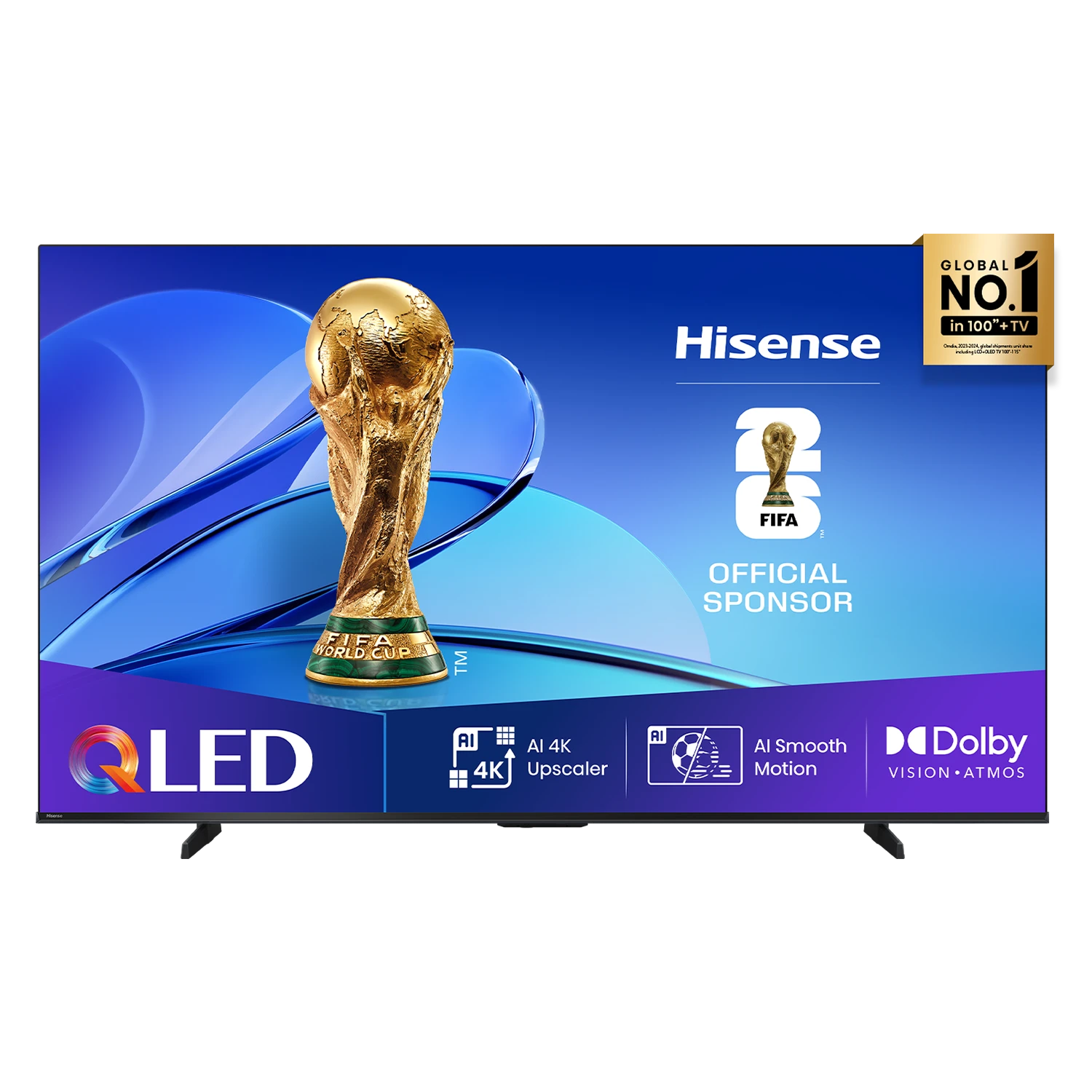
The Hisense U65QF represents the brand's 2025 entry-level ULED Mini-LED television, targeting budget-conscious consumers who refuse to sacrifice modern features. Available in sizes from 55 to 100 inches, this TV packs HDMI 2.1 bandwidth on two ports for 4k @ 144Hz gaming, comprehensive HDR support including Dolby Vision and HDR10+, and Amazon's Fire TV interface with Alexa integration. Professional testing reveals solid fundamentals: good contrast from its VA panel with local dimming, great SDR brightness reaching levels that surpass competitors like the Samsung Q7F 2025, and surprisingly competent built-in audio with a 2.1-channel system including a rear-mounted subwoofer. The 55-inch model features 160 local dimming zones and up to 1000 nits peak brightness, delivering vibrant colors and deep blacks that elevate it above typical budget offerings. However, critics consistently note mediocre black uniformity, poor PQ EOTF tracking that overbrightens HDR content, and inadequate direct reflection handling that limits daytime viewing in rooms with windows facing the screen.[1][2][3]
Pros
- Outstanding gaming specifications with two HDMI 2.1 ports supporting 4k @ 144Hz, VRR (FreeSync Premium, HDMI Forum VRR, G-SYNC compatible), and very low 13.2ms input lag
- Great SDR brightness that overcomes glare from indirect lighting and maintains deep blacks and vibrant colors even in well-lit rooms
- Surprisingly good built-in audio with decent bass response, clear dialogue, and useful EQ controls including a five-band equalizer
- Excellent pre-calibration color accuracy in SDR with outstanding white balance and minimal visible errors out of the box
- Comprehensive HDR format support including Dolby Vision IQ, HDR10+ Adaptive, HDR10, and HLG for maximum content compatibility
Cons
- Poor PQ EOTF tracking that displays HDR content drastically brighter than intended, failing to respect filmmaker intent
- Mediocre black uniformity with visible cloudiness and blooming around highlights and subtitles during dark scenes
- Inadequate direct reflection handling that reflects direct light sources like a mirror, limiting placement options
- Alright viewing angle with noticeable gamma shifting, brightness loss, and color washout from off-center positions
- Slower pixel transitions at 144Hz compared to 120Hz, resulting in noticeable motion blur during fast action
The Hisense U65QF represents the brand's 2025 entry-level ULED Mini-LED television, targeting budget-conscious consumers who refuse to sacrifice modern features. Available in sizes from 55 to 100 inches, this TV packs HDMI 2.1 bandwidth on two ports for 4k @ 144Hz gaming, comprehensive HDR support including Dolby Vision and HDR10+, and Amazon's Fire TV interface with Alexa integration. Professional testing reveals solid fundamentals: good contrast from its VA panel with local dimming, great SDR brightness reaching levels that surpass competitors like the Samsung Q7F 2025, and surprisingly competent built-in audio with a 2.1-channel system including a rear-mounted subwoofer. The 55-inch model features 160 local dimming zones and up to 1000 nits peak brightness, delivering vibrant colors and deep blacks that elevate it above typical budget offerings. However, critics consistently note mediocre black uniformity, poor PQ EOTF tracking that overbrightens HDR content, and inadequate direct reflection handling that limits daytime viewing in rooms with windows facing the screen.[1][2][3]
Design and Build Quality
The Hisense U65QF follows conventional budget TV design language without attempting to reinvent aesthetics. The chassis employs plastic construction throughout, which feels inexpensive to the touch but maintains adequate structural rigidity for daily use. The bezel measures impressively thin for this price segment, allowing the picture to dominate the viewing experience rather than distracting borders. Two plastic feet support the display with a 44-inch footprint on the 65-inch model, though unlike competing TVs such as the TCL QM6K, these feet lack position adjustment options.[1][2]
The rear panel features a grid-like texture reminiscent of Sony's design approach, housing all connections in a side-facing recessed cutout. This placement proves problematic for wall-mounted installations, as ports become difficult to access, and the absence of cable management clips or grooves results in exposed cables extending from the sides. The feet elevate the screen only 2.17 inches, insufficient clearance for thicker soundbars which will obstruct the bottom portion of the display.[1][2]
RTINGS testing confirmed decent build quality free from manufacturing defects, though the materials reinforce this television's budget positioning. The remote control provides essential functions through a standard button layout, integrating an Alexa voice assistant button for hands-free control when paired with Echo devices. Notably absent is a dedicated input selection button, requiring menu navigation to switch sources.[2][1]
Performance in Real Use
The U65QF demonstrates its strengths most clearly in rooms with indirect lighting, where its measured SDR brightness of 463 cd/m² in real-world content substantially outperforms budget competitors. TechRadar's reviewer spent weeks with the television across multiple content types and confirmed that upgrading from a typical budget TV produces immediately noticeable improvements in brightness and contrast. The Mini-LED backlight with local dimming zones delivers good native contrast, presenting deep blacks when bright elements coexist on screen.[1][2]
HDR content reveals both capability and limitation. RTINGS measured adequate peak HDR brightness approaching 1000 nits with Dynamic Contrast disabled, allowing highlights in moderately lit scenes to stand out convincingly. A Reddit user upgrading from a five-year-old display expressed surprise at the vibrancy and depth HDR provides on this set. However, the television's poor PQ EOTF tracking fundamentally undermines HDR accuracy by displaying nearly all content drastically brighter than content creators intended. This technical flaw means cinephiles pursuing faithful reproduction will find the U65QF unsuitable despite its adequate raw brightness capabilities.[14][2]
Color performance exceeds expectations for this price tier. RTINGS measured great pre-calibration SDR color accuracy with outstanding white balance, delivering natural-looking images immediately after setup. YouTube reviewer Kate confirmed the TV covers approximately 99 percent of the Rec 709 color gamut with a delta E under two, meaning balanced, natural colors straight from the box. Multiple Best Buy customers praised the vibrant, accurate color reproduction that surpassed their previous televisions.[5][7][2][4]
Gaming represents a genuine strength. The U65QF provides two HDMI 2.1 ports supporting the full 48Gbps bandwidth specification, enabling 4k resolution at 144Hz with variable refresh rate support across FreeSync Premium, HDMI Forum VRR, and G-SYNC compatibility. Input lag measures a very low 13.2 milliseconds at 144Hz, ensuring responsive control in competitive titles. The television automatically switches to Game Mode when detecting console activation, though this convenience excludes a dedicated gaming settings menu for fine-tuning.[5][2][1]
Motion handling exposes the display's budget heritage. Pixel transitions measure slower at 144Hz than at 120Hz, creating noticeable blur behind fast-moving objects. TechRadar noted visible ghosting in quick action sequences and blooming around bright objects against dark backgrounds. Sports viewing remains acceptable due to the high refresh panel, but viewers sensitive to motion artifacts will notice the compromises. The optional motion interpolation feature struggles significantly, producing distracting artifacts even in moderately paced content.[2][1]
Ease of Use
Fire TV OS provides straightforward navigation through a familiar interface, though Amazon's implementation carries baggage. The home screen displays a large rotating content banner atop rows of suggested viewing heavily weighted toward Amazon Prime Video, supplemented by literal product advertisements for items like pet food. TechRadar's reviewer found navigation intuitive but criticized the default autoplay behavior when highlighting content, though this setting can be disabled. Best Buy customers consistently praised the smooth, responsive interface performance during daily operation.[4][1]
Setup requires minimal effort beyond unpacking and basic configuration. Multiple verified purchasers on Best Buy highlighted the straightforward assembly and initialization process, with one noting the television was ready to use in minutes. Alexa integration functions as advertised for those invested in Amazon's ecosystem, enabling voice commands through the remote or paired Echo speakers to launch applications, adjust volume, and control playback.[7][1]
One frustrating quirk affects picture adjustment: users cannot access advanced settings for brightness, color, motion, and clarity from the home menu. These controls only become available when actively viewing content, requiring users to open a video source before fine-tuning the display. Additionally, the backlight adjustment slider responds extremely slowly to remote inputs, lacking the hold-to-scroll functionality expected in modern interfaces.[1][2]
Reliability and Long-Term Ownership
The U65QF launched in June 2025, providing limited long-term reliability data as of this review. Hisense includes a standard one-year warranty covering manufacturing defects. Multiple Best Buy customers who owned previous Hisense models reported satisfaction with the brand's consistency and reliability across their multiple television purchases. One reviewer specifically mentioned owning three Hisense TVs throughout their homes, suggesting confidence in the brand's durability.[2][4][1]
The VA panel technology eliminates burn-in concerns that affect OLED displays, making the U65QF suitable for varied content including static elements like gaming HUDs or news tickers. Power consumption measures 180 watts during typical operation and drops below 0.5 watts in standby mode, representing reasonable efficiency for a 55-inch Mini-LED television.[4][2]
Some users reported minor quality variations. One Best Buy customer noted experiencing problems shortly after purchase but did not elaborate on specifics. Another mentioned occasional difficulties when adjusting settings in Ambient mode, though this represented their only operational hiccup. The television's mediocre black uniformity, while a consistent characteristic rather than a defect, means cloudiness and blooming during dark scenes varies between units based on panel lottery.[7][2][4]
Use Cases
The U65QF suits several specific buyer profiles. Budget-conscious gamers seeking HDMI 2.1 capabilities for PlayStation 5, Xbox Series X, or high-refresh PC gaming find exceptional value, as this television delivers those features at prices hundreds below competing options. Living room viewing in spaces with indirect lighting takes full advantage of the great SDR brightness that maintains picture quality throughout the day.[5][1][2]
Casual movie watchers who prioritize screen size, modern smart features, and solid overall image quality over absolute accuracy will appreciate the U65QF's strengths. Best Buy customers frequently mentioned using the television for mixed content including sports, casual gaming, and streaming, expressing satisfaction across these applications. Those invested in Amazon's Alexa ecosystem gain additional value through seamless integration with existing Echo devices and smart home routines.[7][1][4]
Conversely, dedicated home theater enthusiasts pursuing reference-quality HDR reproduction should avoid this model due to its poor PQ EOTF tracking and mediocre black uniformity. Wide seating arrangements for sports viewing or family movie nights prove problematic given the alright but not great viewing angle that exhibits gamma shifting and color washout beyond moderate off-center positions. Rooms with windows or bright light sources directly facing the screen present challenges, as the inadequate direct reflection handling mirrors those sources rather than diffusing them.[1][2][7]
The television works well for viewers upgrading from older budget displays, where the improvements in brightness, color, and features create an immediately noticeable difference. It performs less convincingly for those stepping down from premium OLED or high-end Mini-LED models, as the compromises in black uniformity, motion handling, and viewing angle become more apparent through direct comparison.[14]
| Specification | Details |
|---|---|
| Screen Size | 55 inches (also available in 65", 75", 85", 100") |
| Resolution | 4K UHD (3840 x 2160) |
| Panel Type | VA with Mini-LED backlight |
| Refresh Rate | 144Hz native |
| Local Dimming Zones | 160 zones (55"), 300 zones (65") |
| Peak Brightness | Up to 1000 nits |
| HDR Support | Dolby Vision IQ, HDR10+ Adaptive, HDR10, HLG |
| Smart Platform | Fire TV OS with Alexa built-in |
| HDMI Ports | 4 total (2x HDMI 2.1 @ 48Gbps, 2x HDMI 2.0) |
| Gaming Features | VRR, ALLM, FreeSync Premium, G-SYNC compatible |
| Audio System | 2.1 channel, 2x10W + 20W subwoofer, Dolby Atmos |
| Connectivity | WiFi 6, Bluetooth 5.2, USB 3.0/2.0, Optical audio out |
| Color Technology | QLED with billion+ color shades |
| Compatibility | Apple AirPlay, HomeKit, Matter Casting |
| Power Consumption | 180W (typical), <0.5W standby |
Buy
- You need a budget gaming TV with full HDMI 2.1 capabilities and 144Hz support for next-gen consoles or PC gaming[5][2]
- You watch primarily in rooms with indirect lighting where the TV's great SDR brightness shines[2][1]
- You're invested in Amazon's Alexa ecosystem and want hands-free voice control integration[4][1]
- You want to skip purchasing a soundbar initially thanks to the TV's competent built-in 2.1-channel audio system[4][1]
- You prioritize screen size and modern features over absolute picture quality perfection at this price point[5][1]
Skip
- You watch HDR content in a dedicated home theater and care about accurate tone mapping and filmmaker intent[1][2]
- Your TV placement involves direct light sources facing the screen, such as windows opposite the display[2][1]
- You need wide seating arrangements for sports viewing or family movie nights[7][2]
- You primarily watch fast-motion content like sports and are sensitive to motion blur and ghosting[5][1]
- You prefer Google TV or Roku's interface over Amazon's ad-heavy Fire TV platform[4][1]
Critic Reviews
No reviews yet.
User Reviews
No reviews yet.