
LG B5 OLED
LG's 2025 entry-level OLED delivers perfect blacks and excellent gaming performance but struggles with brightness and reflections in well-lit rooms, making minimal improvements over its predecessor.
Updated January 28, 2026
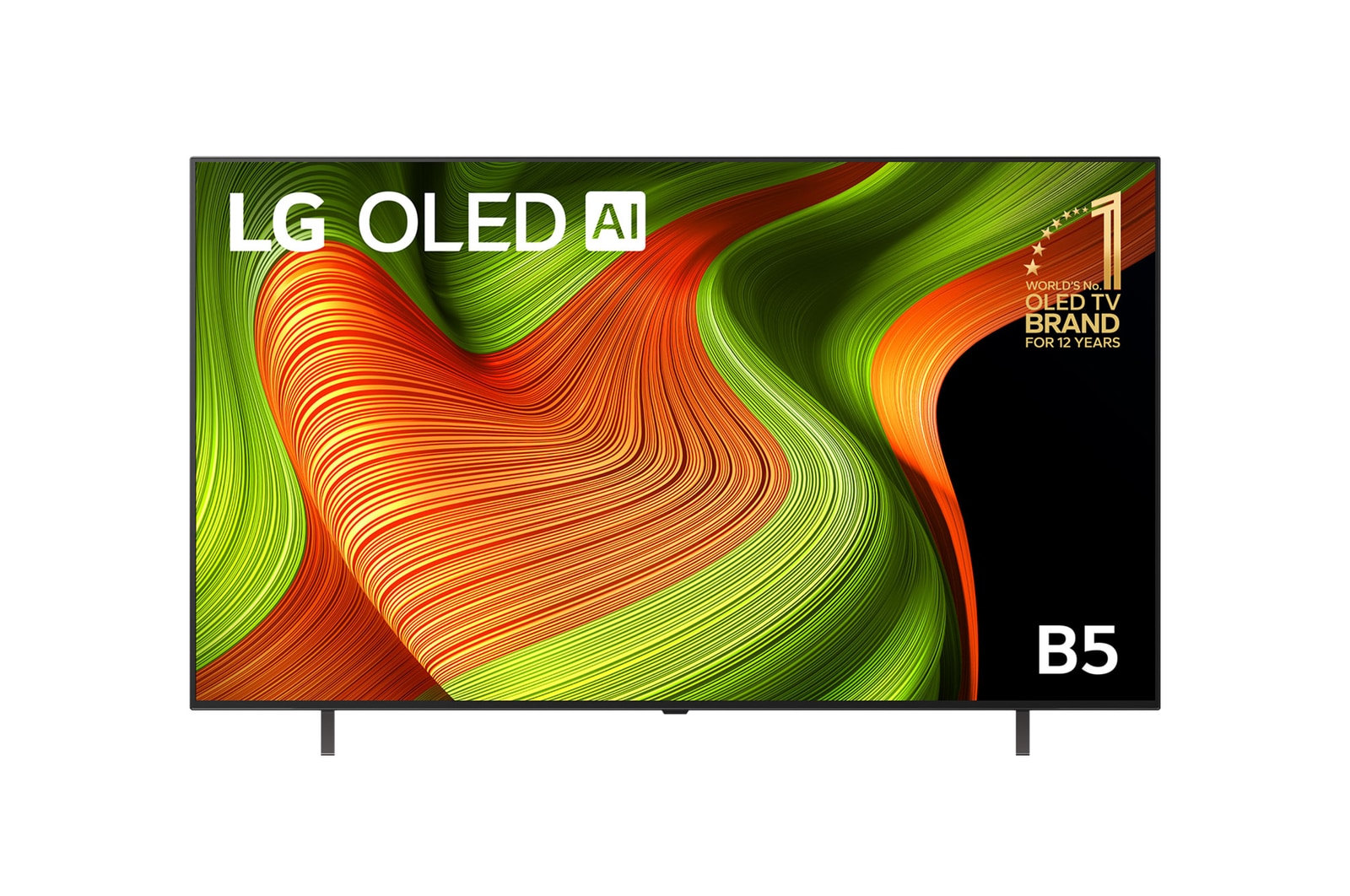
The LG B5 OLED represents LG's most affordable entry into OLED technology for 2025, offering the core advantages of self-lit pixels, perfect blacks, and vibrant colors at an accessible price point. Powered by the α8 AI Processor 4K Gen2, this television excels in dark room viewing and gaming scenarios, delivering near-instantaneous response times and comprehensive HDMI 2.1 support across all four ports. However, the B5 faces meaningful limitations in brightness output and reflection handling that compromise daytime viewing experiences. Most notably, this model shows virtually no performance improvement over the 2024 B4, raising questions about its value proposition. The television runs webOS 25 and includes features like 120Hz native refresh rate, Dolby Vision support, and excellent out-of-the-box color accuracy, making it suitable for home theater enthusiasts and gamers who can control ambient lighting.[1][2][3]
Pros
- Perfect black levels with near-infinite contrast ratio deliver exceptional dark room performance with no blooming around bright highlights
- All four HDMI ports support full HDMI 2.1 bandwidth with 4K at 120Hz, VRR, and extremely low input lag of 9ms in Game Optimizer mode
- Excellent color accuracy out of the box in both SDR and HDR modes requires no professional calibration for reference-level picture quality
- Wide viewing angles maintain color and contrast accuracy even from sharp angles, ideal for group viewing scenarios
- Strong image processing capabilities effectively upscale low-resolution content and smooth out compression artifacts without losing fine details
Cons
- Mediocre peak brightness of only 204 nits in SDR and 632 nits in HDR fails to overcome glare in bright rooms
- Highly reflective screen without advanced anti-glare coating allows direct reflections to wash out picture quality
- Nearly identical performance to 2024 B4 model offers no meaningful upgrade justification
- Noticeable stutter in slow panning shots due to near-instantaneous pixel response time
- Dropped DTS audio format support across LG's entire 2025 lineup limits compatibility with physical media
The LG B5 OLED represents LG's most affordable entry into OLED technology for 2025, offering the core advantages of self-lit pixels, perfect blacks, and vibrant colors at an accessible price point. Powered by the α8 AI Processor 4K Gen2, this television excels in dark room viewing and gaming scenarios, delivering near-instantaneous response times and comprehensive HDMI 2.1 support across all four ports. However, the B5 faces meaningful limitations in brightness output and reflection handling that compromise daytime viewing experiences. Most notably, this model shows virtually no performance improvement over the 2024 B4, raising questions about its value proposition. The television runs webOS 25 and includes features like 120Hz native refresh rate, Dolby Vision support, and excellent out-of-the-box color accuracy, making it suitable for home theater enthusiasts and gamers who can control ambient lighting.[1][2][3]
Design and Build Quality
The LG B5 OLED presents a refined aesthetic that carries forward the design language established by its predecessor while incorporating subtle refinements from the higher-tier C5 model. The 65-inch variant measures just 1.8 inches thick and weighs 37.7 pounds without the stand, making it remarkably light for an OLED display of this size. The panel achieves its svelte profile through the elimination of traditional backlighting systems, with self-lit OLED pixels requiring minimal supporting infrastructure.[2][1]
The rear panel features a dark gray marble-like finish that elevates the visual presentation beyond typical entry-level televisions. Two rectangular metal feet provide stable support while lifting the display 3.4 inches above the surface, accommodating most soundbars without obstruction. Cable management clips attach to the feet for organized wire routing. Build quality proves solid with no flex or creep in the panel, though RTINGS noted two dead pixels on their test unit.[2][1]
Port selection includes four HDMI 2.1 inputs supporting full 48Gbps bandwidth, two USB ports, optical audio output, Ethernet, and coaxial connections. The port layout splits between side-facing and rear-facing orientations, with the eARC port positioned on the rear panel creating potential accessibility challenges for wall-mounted installations. Users planning flush wall mounting may require 90-degree HDMI adapters to connect soundbars effectively.[2][1]
Performance in Real Use
Dark room performance represents the B5's most compelling strength, delivering the perfect blacks and infinite contrast ratio that define OLED technology. The self-lit pixel architecture eliminates blooming entirely, allowing bright highlights to appear adjacent to completely black areas without any halo effect. Tom's Guide noted that dark content looks "lush and rich" from any viewing angle, demonstrating the fundamental advantages of OLED over LCD technologies.[1][2]
However, brightness limitations severely constrain daytime usability in rooms with ambient light. Tom's Guide measured peak brightness of only 204 nits in SDR and 632 nits in HDR, substantially below competing technologies. RTINGS characterized the SDR brightness as "mediocre" and noted the television "struggles with bright content like sports". Testing with the film "Sinners" proved particularly revealing, with Tom's Guide reporting the viewing experience was "almost impossible in a room with even a moderate amount of lighting" due to the combination of low brightness and reflective screen coating.[2][1]
The reflection handling compounds the brightness deficiency. Unlike the C5 and G5 models that incorporate advanced anti-glare technology, the B5 uses a basic coating that only slightly dims reflections. Direct light sources create ghostly floating images on the screen that constantly divert attention from content. RTINGS confirmed "direct reflections are distracting" and advised against placing the television opposite windows or lights.[1][2]
Color performance demonstrates the B5's technical competence despite brightness constraints. Tom's Guide measured a Delta-E of 1.65, indicating excellent accuracy, with strong coverage of the Rec. 709 SDR color gamut. The television ships with outstanding out-of-the-box calibration in Filmmaker mode, requiring no professional adjustment for reference-level accuracy. RTINGS praised the "fantastic color accuracy out of the box in both HDR and SDR". The WOLED panel architecture does introduce some color purity compromises, with the white subpixel diluting reds and greens slightly, but this proves imperceptible during normal viewing.[3][2][1]
Gaming Performance
Gaming represents a clear highlight across all testing. Tom's Guide measured input lag of 9ms with Game Optimizer mode enabled, ranking among the lowest measurements recorded. The near-instantaneous pixel response time eliminates motion blur entirely, delivering razor-sharp clarity during fast action sequences. All four HDMI ports support the complete HDMI 2.1 specification including 4K at 120Hz, Variable Refresh Rate, Auto Low Latency Mode, and Low Framerate Compensation.[2][1]
Console compatibility proves comprehensive with full PlayStation 5 and Xbox Series X/S support including Dolby Vision gaming and FreeSync Premium Pro. The Game Optimizer mode provides an overlay dashboard displaying real-time performance metrics and picture settings without exiting gameplay. Tom's Guide reported "Indiana Jones and the Great Circle" played "extremely well" with smooth performance matching the gameplay quality, though dark tomb environments again revealed reflection issues.[1][2]
The 120Hz native refresh rate operates across all supported resolutions and works seamlessly with Variable Refresh Rate technologies to eliminate screen tearing. RTINGS confirmed the television maintains incredibly low input lag across all supported refresh rates and resolutions. Gaming in HDR presents a "bright and vibrant panel" according to RTINGS testing.[1]
Image Processing and Upscaling
The α8 AI Processor 4K Gen2 delivers strong performance with low-quality source material. RTINGS characterized the upscaling capabilities as "very good" with the processor doing "a great job smoothing out macro blocking and pixelization without removing most fine details". Low-resolution content including DVDs and compressed streaming feeds display with minimal artifacts. The processor successfully cleans up low-bitrate streams while preserving fine details, making it suitable for streaming from services with variable quality.[1]
HDR tone mapping achieves excellent results with superb EOTF tracking ensuring content displays at the brightness levels intended by creators. Gradient handling proves very good with minimal posterization except in dark grays and bright greens. Unlike the C5 and G5 models that exhibit diagonal banding artifacts, the B5 avoids these issues entirely.[1]
Long-Term Ownership Feedback
The minimal evolution from the B4 model emerged as a consistent criticism across professional and enthusiast reviews. Tom's Guide directly stated "there's not a single compelling reason to upgrade from the B4" after confirming nearly identical performance measurements. RTINGS concurred, noting "there's very little difference in features or specs over the 2024 version" and advising that buyers can find the older model for less without missing anything.[3][2][1]
Several consumer reviews mentioned the lack of DTS audio format support as a notable omission, particularly for users with physical media collections. LG dropped DTS support across their entire 2025 OLED lineup after including it in 2023 and 2024 models. RTINGS also documented intermittent issues with Dolby Atmos playback requiring power cycles to resolve, though factory resets did not permanently fix the problem.[1]
The webOS 25 smart platform continues to receive praise for its intuitive interface and comprehensive app selection. The redesigned Magic Remote adopts a flatter profile with matte finish, though some users miss the dedicated mute and input buttons from previous versions. LG promises at least four years of webOS updates ensuring continued platform support.[2][1]
Use Cases
The B5 serves dedicated home theater environments exceptionally well where lighting can be controlled. Movie enthusiasts with darkened viewing rooms will appreciate the perfect blacks, accurate colors, and wide viewing angles. Gaming enthusiasts benefit from the comprehensive HDMI 2.1 feature set and extraordinarily low input lag. Budget-conscious buyers seeking their first OLED display find substantial value in the entry-level pricing while accessing core OLED advantages.[4][5][2][1]
Conversely, the B5 proves poorly suited for bright living rooms with substantial windows or ambient lighting. Daytime sports viewing presents particular challenges with the combination of bright content and low SDR peak brightness creating washed-out images. Users who primarily watch content with dark cinematography during daytime hours should consider brighter alternatives or accept the need for blackout curtains. Existing B4 owners gain no meaningful benefit from upgrading given the negligible performance improvements.[3][2][1]
| Specification | Details |
|---|---|
| Display Type | 4K OLED with WOLED panel technology |
| Screen Sizes Available | 48, 55, 65, 77, 83 inches |
| Resolution | 3840 x 2160 (4K Ultra HD) |
| Refresh Rate | 120Hz native |
| Processor | α8 AI Processor 4K Gen2 |
| HDR Support | Dolby Vision, HDR10, HLG (no HDR10+) |
| HDMI Ports | 4 x HDMI 2.1 (full 48Gbps bandwidth) |
| USB Ports | 2 |
| VRR Support | HDMI Forum VRR, NVIDIA G-Sync, AMD FreeSync Premium Pro |
| Audio Formats | Dolby Atmos (no DTS support) |
| Smart Platform | webOS 25 |
| Connectivity | Wi-Fi 6 (802.11ax including 6GHz), Ethernet, Bluetooth |
| Weight (65" without stand) | 37.7 pounds |
| VESA Mount | 300 x 200mm |
Buy
- Budget-conscious OLED buyers seeking true black levels and infinite contrast at entry-level pricing[4][1]
- Gamers requiring comprehensive HDMI 2.1 features, low input lag, and 120Hz performance across multiple devices[2][1]
- Home theater enthusiasts with dedicated dark or moderately lit viewing rooms[1]
- Users prioritizing wide viewing angles for family viewing or wide seating arrangements[1]
- Content creators and videophiles who value reference-level color accuracy without calibration[3][1]
Skip
- Bright room viewing environments with significant natural light or multiple light sources[2]
- Users who watch content with predominantly dark cinematography during daytime hours[2]
- Existing B4 owners considering an upgrade given negligible performance improvements[3][2]
- Buyers seeking the brightest possible HDR experience with specular highlights that pop[1]
- Users requiring DTS audio format support for physical media collections[1]
Critic Reviews
No reviews yet.
User Reviews
No reviews yet.