
LG QNED
LG's QNED series combines Quantum Dot, NanoCell, and Mini-LED backlighting to deliver vibrant colors and gaming features, but blooming and mediocre black levels prevent it from reaching premium picture quality.
Updated January 28, 2026
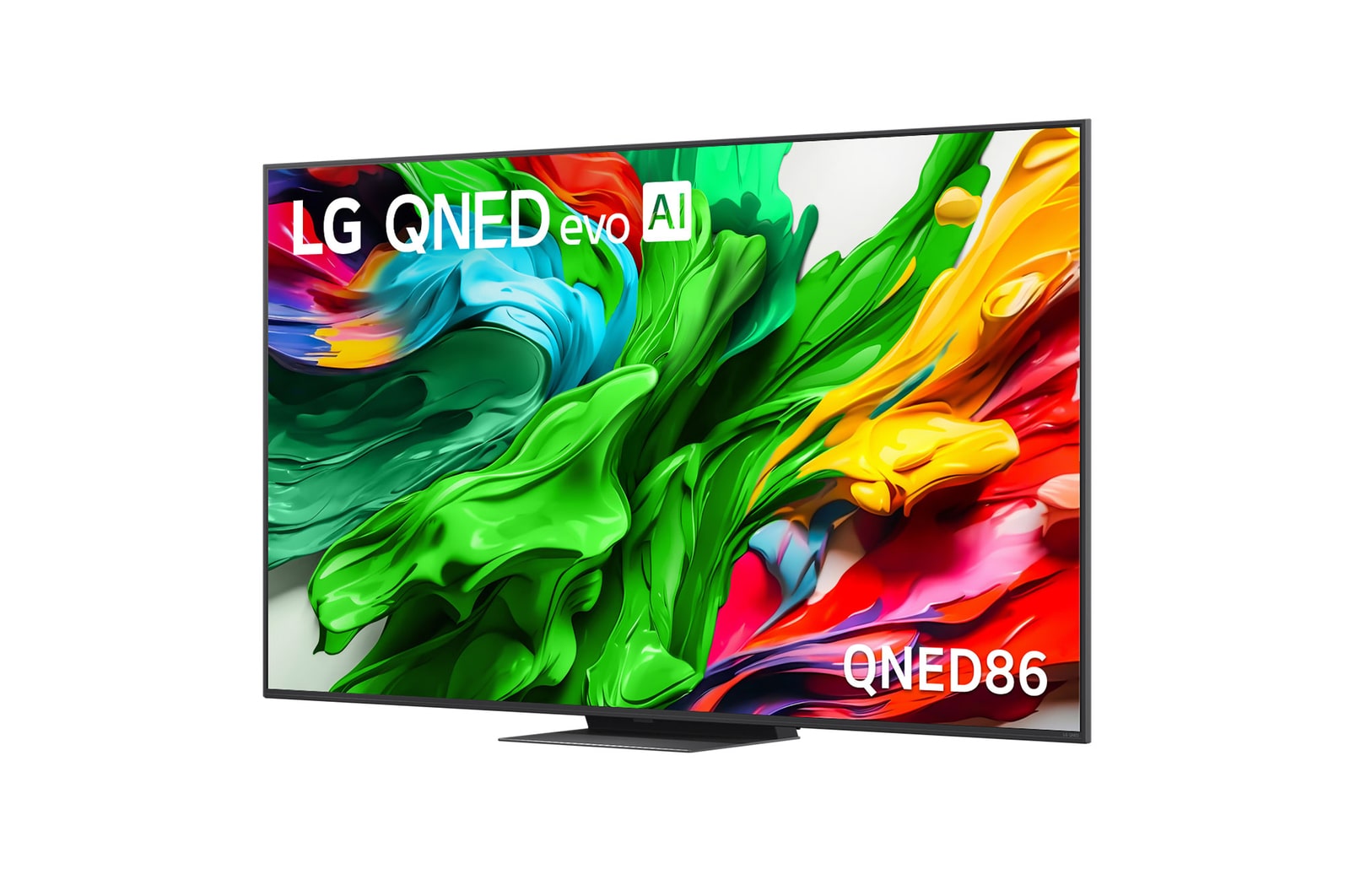
LG's QNED television series represents the company's LCD-based alternative to its acclaimed OLED lineup, combining multiple display technologies into one package. The QNED range uses Quantum Dot and NanoCell color technologies paired with Mini-LED backlighting to deliver bright, colorful images with up to 30,000 Mini LEDs and 2,500 dimming zones. While QNED TVs excel at gaming with full HDMI 2.1 support, 120Hz refresh rates, and AMD FreeSync Premium, they struggle with dark scene performance due to limited local dimming effectiveness. The technology positions itself as a more affordable middle ground between standard LED TVs and premium OLED displays, though critics consistently note that blooming around bright objects and mediocre contrast ratios hold the series back from competing with higher-end models.[1][2][3][4][5][6][7][8]
Pros
- Strong gaming feature set with HDMI 2.1, 120Hz support, VRR, ALLM, and AMD FreeSync Premium working seamlessly out of the box
- Excellent color accuracy with Delta-E scores around 2.7 in HDR content, delivering vibrant and natural color reproduction
- Superior peak brightness compared to OLED, making it well-suited for bright rooms and daytime viewing
- Fast webOS smart TV platform with 5-year software upgrade support and comprehensive streaming app selection
- Wide viewing angles for an LCD television, maintaining better off-axis image quality than standard LED TVs
Cons
- Poor native contrast and black uniformity with visible blooming around bright objects on dark backgrounds
- Limited local dimming zones create distracting haloing effects, particularly noticeable in letterboxed content and gaming HUDs
- Dim HDR peak brightness prevents highlights from properly standing out in HDR content
- Lacks Dolby Vision support on entry-level models, limiting dynamic HDR performance on mastered content
- Slower pixel response time compared to OLED results in motion blur during fast-paced action scenes and gaming
LG's QNED television series represents the company's LCD-based alternative to its acclaimed OLED lineup, combining multiple display technologies into one package. The QNED range uses Quantum Dot and NanoCell color technologies paired with Mini-LED backlighting to deliver bright, colorful images with up to 30,000 Mini LEDs and 2,500 dimming zones. While QNED TVs excel at gaming with full HDMI 2.1 support, 120Hz refresh rates, and AMD FreeSync Premium, they struggle with dark scene performance due to limited local dimming effectiveness. The technology positions itself as a more affordable middle ground between standard LED TVs and premium OLED displays, though critics consistently note that blooming around bright objects and mediocre contrast ratios hold the series back from competing with higher-end models.[1][2][3][4][5][6][7][8]
Design and Build Quality
LG's QNED series represents a technical convergence of three distinct display technologies: Quantum Dot color filters, NanoCell particle layers, and Mini-LED backlighting. This multi-layered approach aims to deliver the vibrant color reproduction of Quantum Dot displays while leveraging Mini-LED backlighting for improved contrast control compared to standard edge-lit LED panels. The implementation uses up to 30,000 individual Mini LEDs organized into as many as 2,500 dimming zones depending on the model, a significant increase over conventional LED arrays. The physical design follows LG's contemporary aesthetic with thin bezels and a center-mounted stand, though the panel depth exceeds OLED models due to the additional backlighting components required.[15][4][7][10][6]
Build quality aligns with LG's television standards, featuring solid construction and materials appropriate for the mid-range positioning. The included Magic Remote provides motion control and voice command functionality through LG's ThinQ AI platform, with NFC pairing capability for compatible devices. Panel uniformity varies across the QNED lineup, with higher-tier models like the QNED90 and QNED92 delivering more consistent backlighting than entry-level QNED80 variants.[4][20][12][9][17]
Picture Quality Performance
Color accuracy represents one of QNED's strongest technical attributes, with professional testing measuring Delta-E values around 2.7 in HDR content, below the threshold of 3 where color errors become perceptible to most viewers. The combination of Quantum Dot and NanoCell technologies delivers 100% color volume across the DCI-P3 color gamut, producing saturated yet natural-looking colors in bright, colorful content. Sports broadcasts, animated content, and outdoor scenes benefit particularly from this color capability, with skin tones remaining accurate and foliage appearing lush and vibrant.[15][10][11][9]
However, QNED's performance degrades significantly in dark scene content where contrast limitations become apparent. Native contrast ratios measure poorly compared to both OLED and VA-panel LCD competitors, with black levels appearing closer to dark gray than true black even with local dimming engaged. The Precision Dimming feature, while functional, struggles with the relatively limited zone count, creating visible blooming halos around bright objects against dark backgrounds. Gaming HUDs, white subtitles on letterbox bars, and isolated light sources in dark scenes all reveal this limitation. Reviewers consistently identify this as QNED's most significant compromise, particularly disappointing for users upgrading from older TVs expecting modern performance to match OLED's deep blacks.[7][2][14][1][3]
HDR performance proves similarly inconsistent across different content types. Peak brightness in HDR mode measures below expectations for a Mini-LED television, preventing specular highlights from achieving the intended impact. While the QNED85A and lower models particularly struggle with dim HDR output, higher-tier variants like the QNED92 deliver better peak brightness though still trailing competitors. Entry-level QNED80 models lack Dolby Vision support entirely, limiting dynamic metadata benefits for mastered content on streaming platforms and Ultra HD Blu-rays.[5][9][3]
Gaming Performance
Gaming represents QNED's most competitive use case, with implementation of full HDMI 2.1 specifications across multiple ports enabling 4K resolution at 120Hz refresh rates. AMD FreeSync Premium, NVIDIA G-SYNC compatibility, Variable Refresh Rate, and Auto Low Latency Mode all function correctly out of the box when paired with PlayStation 5, Xbox Series X, or gaming PCs. Input lag measures consistently low across all refresh rates, with testers reporting responsive gameplay in competitive multiplayer titles.[4][2][5][8]
LG's Game Optimizer interface provides convenient access to gaming-specific settings without requiring navigation through complex menus, displaying real-time frame rate counters and VRR status indicators. The system automatically detects gaming devices and switches to appropriate picture modes, with dark level adjustments available on-the-fly. Testing with demanding titles like Resident Evil Village at 4K/60fps with ray tracing and Rainbow Six Siege at 120fps demonstrates the panel's capability to handle both fidelity and performance modes effectively.[8]
Motion handling during gameplay proves adequate though not exceptional, with the panel's response time slower than OLED alternatives. Fast-paced first-person shooters exhibit some motion blur in darker scenes, though VRR implementation helps smooth frame rate fluctuations. The blooming issues affecting movie content remain visible in gaming scenarios with high-contrast HUD elements against dark backgrounds, though rapid gameplay action makes this less noticeable than in static film content.[1][8][3]
Smart Features and User Experience
LG's webOS platform provides a mature, responsive smart TV experience with comprehensive streaming app support and intuitive navigation. The interface operates noticeably faster than many competing smart TV platforms, with minimal lag when switching between apps or navigating menus. LG now offers five years of webOS software updates along with a five-year limited panel warranty, providing longer support than typical television warranties.[13][10][17]
The ThinQ AI integration enables voice control, content recommendations, and smart home integration for users invested in LG's ecosystem. Streaming apps load quickly and operate smoothly, with the Alpha 7 or Alpha 8 AI processors providing adequate performance for demanding applications. Picture processing capabilities include effective upscaling of lower-resolution content and good content smoothing for compressed streams.[15][4][3]
Initial calibration proves important for optimal results, as out-of-box picture modes tend toward oversaturated colors with excessive brightness. Reviewers note that Standard and Vivid modes create what one termed a "Frankenpicture" with unnatural colors and poor contrast. However, users willing to adjust basic calibration settings or use Filmmaker Mode can achieve significantly improved picture quality. The learning curve for optimal setup may frustrate casual users expecting perfect performance immediately after unboxing.[12]
Long-Term Ownership Considerations
Consumer feedback suggests satisfactory reliability within typical television replacement cycles of five to ten years, though limited long-term data exists for relatively recent QNED models. Users report general satisfaction with daily performance, particularly those upgrading from significantly older displays where the improvement appears dramatic. The technology avoids OLED's burn-in concerns, making it suitable for static content display including PC monitor usage.[18][17][16]
Audio performance receives mixed feedback, with most reviewers recommending external audio solutions despite Dolby Atmos support. The built-in speakers provide adequate volume and clarity for dialogue but lack bass response and dynamic range for immersive content. Users frequently pair QNED televisions with soundbars to achieve satisfactory audio quality.[2][17][16]
The QNED series occupies a challenging market position between budget LED options and premium OLED displays. For buyers specifically seeking LG's platform and gaming features without OLED pricing, QNED delivers functional performance. However, consumers prioritizing picture quality for movie watching in controlled lighting environments consistently receive recommendations to allocate budget toward OLED alternatives or wait for sales. The technology serves best as a bright room television for mixed content consumption rather than a dedicated home theater display.[7][14][6][8]
| Specification | Details |
|---|---|
| Display Technology | Quantum Dot + NanoCell + Mini-LED backlighting [4][10] |
| Processor | Alpha 7 or Alpha 8 AI Processor (model dependent) [15][4] |
| Refresh Rate | 120Hz native with VRR support [4][8] |
| HDR Support | HDR10, HDR10 Pro, Dolby Vision IQ (on select models) [15][4] |
| Gaming Features | HDMI 2.1, AMD FreeSync Premium, ALLM, HGiG, VRR [4][8] |
| Local Dimming | Precision Dimming or Precision Dimming Pro (up to 2,500 zones) [15][7] |
| Smart Platform | webOS with ThinQ AI, NFC Magic Remote [4][10] |
| Audio | Dolby Atmos support [4] |
| Screen Sizes | Available in 43", 50", 55", 65", 75", 86" configurations [15][16] |
| Color Volume | 100% color volume with Dynamic QNED Color [15] |
Buy
- Console and PC gamers seeking 4K 120fps performance with full HDMI 2.1 feature support at a lower cost than OLED[8]
- Bright room viewing environments where high peak brightness overcomes ambient light and glare[11]
- Sports and daytime content consumption where vibrant colors and brightness matter more than deep blacks[11]
- Households wanting LG's webOS platform and AI processing features without OLED burn-in concerns[10]
- Budget-conscious buyers seeking a middle ground between basic LED and premium OLED display technology[6]
Skip
- Home theater enthusiasts prioritizing deep blacks and contrast for cinematic movie watching[14][7]
- Viewers sensitive to blooming artifacts around bright elements in dark scenes[1][3]
- HDR content enthusiasts wanting impactful highlight performance and full Dolby Vision support[9][3]
- Users upgrading from OLED who expect similar black level performance[14]
- Those seeking best-in-class motion handling for fast-paced content without blur[3]
Critic Reviews
No reviews yet.
User Reviews
No reviews yet.