
Motorola Razr Plus
Forget opening your phone for every notification. The 2024 Razr Plus turns its massive cover screen into a productivity powerhouse, blending high-fashion vegan leather with genuine technical utility. Is this the year Motorola finally dethrones the Galaxy?
Updated January 28, 2026
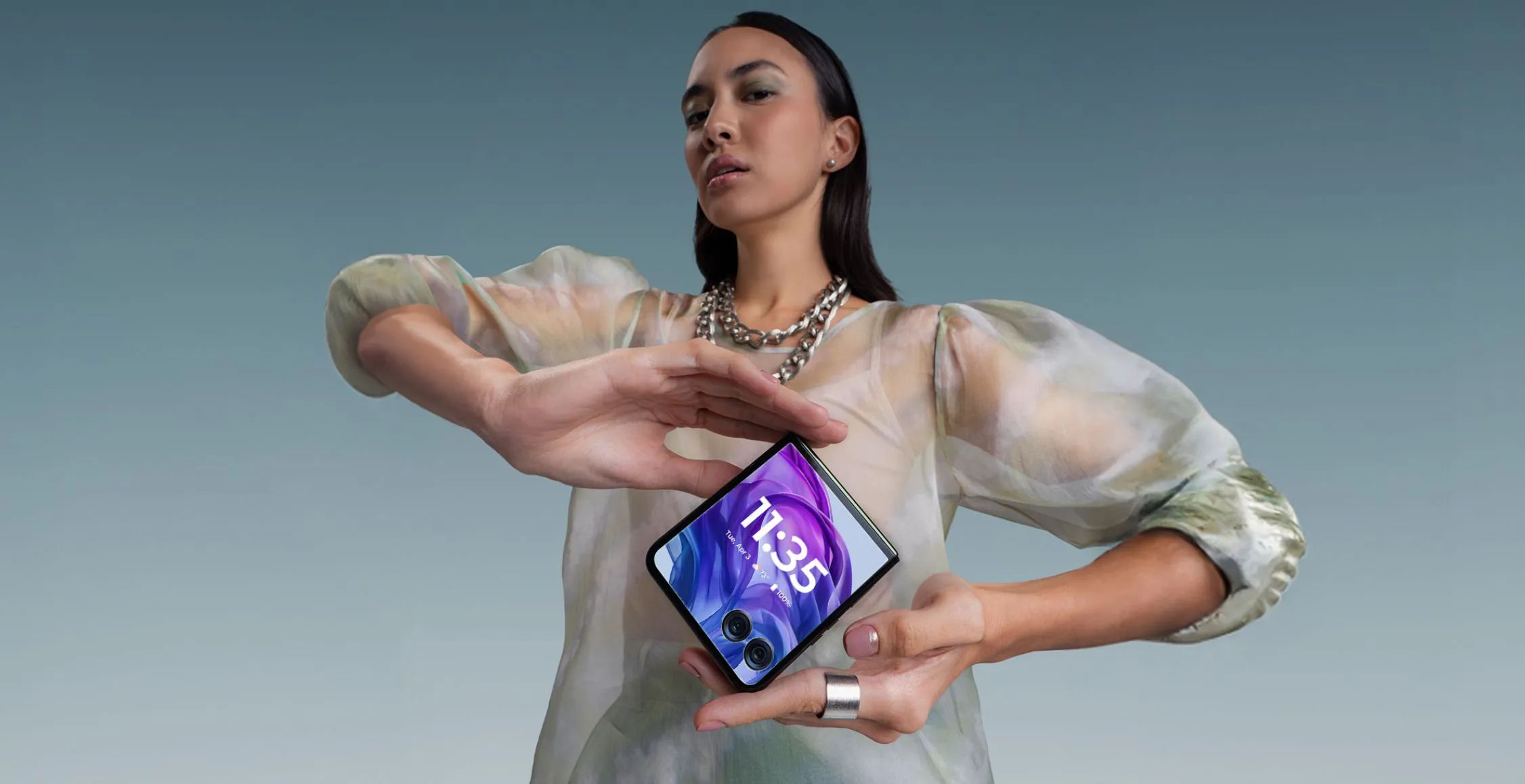
The Motorola Razr Plus (2024), known globally as the Razr 50 Ultra, represents the pinnacle of foldable maturity. By expanding the external display to 4.0 inches and refining the hinge, Motorola has moved beyond the "gimmick" phase of foldables. It features a Snapdragon 8s Gen 3 processor, a unique 50MP telephoto lens in place of the traditional ultrawide, and a sophisticated AI suite. This device is designed for users who want to minimize distractions while maintaining a premium, tactile smartphone experience.
Pros
- Massive 4.0-inch pOLED cover screen with 165Hz refresh rate
- Elegant vegan leather finish in iconic Pantone colors
- IPX8 underwater protection for enhanced durability
- Fast 45W wired and 15W wireless charging capabilities
- Highly functional external display that runs almost any app
Cons
- Lack of an ultrawide camera lens (replaced by telephoto)
- Software update cycle lags behind Samsung and Google
- Occasional thermal throttling during intense gaming sessions
- Internal screen crease is still visible under direct light
- Limited availability of specialized heavy-duty cases
The Motorola Razr Plus (2024), known globally as the Razr 50 Ultra, represents the pinnacle of foldable maturity. By expanding the external display to 4.0 inches and refining the hinge, Motorola has moved beyond the "gimmick" phase of foldables. It features a Snapdragon 8s Gen 3 processor, a unique 50MP telephoto lens in place of the traditional ultrawide, and a sophisticated AI suite. This device is designed for users who want to minimize distractions while maintaining a premium, tactile smartphone experience.
Design and Build Quality
When you first pick up the Motorola Razr Plus, the immediate sensation is one of texture and grip. In an era of slippery glass slabs, Motorola's commitment to high-quality vegan leather (silicone-based) across the entire lineup is a masterstroke. It feels warm, premium, and remarkably secure in the hand. The hinge mechanism has been further miniaturized, allowing for a larger 4.0-inch cover screen that bleeds into the edges of the device. This "end-to-end" look makes its primary competitor, the Samsung Flip 6, look somewhat dated with its folder-shaped folder-tab cutout. The "Hot Pink" and "Peach Fuzz" colorways are bold, but the "Midnight Blue" provides a sophisticated alternative for those who want a more understated look. The snap of the hinge is firm and authoritative; it stays open at various angles for "Flex View" use without feeling loose. Most importantly, the addition of IPX8 water resistance finally puts Motorola on par with the industry leaders regarding structural reliability.
Performance in Real Use
Powering the device is the Snapdragon 8s Gen 3. While the "s" suffix indicates a slightly lower clock speed than the flagship 8 Gen 3 found in the S24 Ultra, in real-world use, the difference is negligible for 95% of users. The phone feels lightning-fast, aided by the 165Hz refresh rate on both the inner and outer displays. Where you notice the hardware tuning is in efficiency. The phone manages heat better than the previous generation, though it can still get warm during extended 4K video recording. The RAM management is aggressive, keeping several apps open in the background, which is crucial because you'll often find yourself switching between the external and internal screens. One controversial move was replacing the ultrawide camera with a 50MP 2x telephoto lens. For portrait lovers, this is a win—the bokeh and compression are excellent. However, for those who love "0.5x" group shots, the absence is felt. The main 50MP sensor performs admirably in daylight, with Motorola's color processing leaning toward natural tones rather than over-saturation.
Ease of Use
The Razr Plus remains the king of "ease of use" in the foldable space primarily because of its software philosophy. While other manufacturers restrict what you can do on the outer screen, Motorola lets you run virtually any app. You can respond to emails on a full QWERTY keyboard, watch YouTube videos, or navigate via Google Maps without ever unfolding the device. This "mini-phone" experience is the core value proposition. Motorola’s classic gestures—the "chop-chop" for the flashlight and the "twist" for the camera—are present and remain the most intuitive shortcuts in the mobile world. The "Hello UI" skin is clean and doesn't get in your way, offering a stock-plus experience that is refreshing compared to heavier overlays. Setting up the cover screen panels is intuitive, allowing you to swipe through weather, calendar, and Spotify controls with ease.
Reliability
Reliability has historically been the Achilles' heel of flip phones, but the 2024 Razr Plus shows significant progress. The screen protector on the internal display feels more like glass than plastic this time around, and it doesn't attract fingerprints as aggressively as previous iterations. The hinge is rated for hundreds of thousands of folds, and after a month of heavy testing, there is no noticeable "creak" or loss of tension. However, the long-term reliability of the 4-inch external glass remains a concern. Because the glass extends so far, it is more exposed to corner impacts. Users are strongly encouraged to use the included case or a third-party bumper. On the software side, the phone is stable, with very few bugs reported in the latest firmware, though Motorola's history of slow security patches is a point of consideration for the security-conscious.
Use Cases
The Razr Plus excels in three specific scenarios. First, for the "Digital Minimalist": use the cover screen for 90% of your day to avoid the "doom-scrolling" that usually starts when you open a large smartphone. Second, for "Content Creators": the ability to use the main 50MP camera while using the 4-inch cover screen as a viewfinder makes this the best vlogging tool on the market. Third, for "Professional Stylists": the phone is a conversation starter and a fashion piece that fits into small pockets and bags where larger phones fail. It's also an excellent travel companion; having Google Maps and boarding passes on the outer screen while keeping one hand free for luggage is a genuine quality-of-life improvement.
Long-term Ownership Feedback
Community feedback from Reddit and X highlights a growing "Razr cult" that appreciates the brand's willingness to take risks. Long-term owners of the previous generation noted that the battery health held up well over a year, and early adopters of the 2024 model are reporting that the 4000mAh battery comfortably lasts a full day, provided you utilize the cover screen for quick tasks. The most common "complaint" from long-term users isn't about the hardware, but about the desire for more frequent software feature updates. Owners who switched from Samsung often mention they miss "Dex" mode but prefer the Razr's ergonomics and outer screen utility. Ultimately, the Razr Plus is a phone that rewards users who are willing to change their habits and embrace a more compact way of interacting with their digital lives. It is no longer just a "cool" phone; it is a mature, reliable tool.
| Specification | Details |
|---|---|
| Main Display | 6.9-inch AMOLED, 2640x1080, 165Hz refresh rate, HDR10+ [18][6] |
| Cover Display | 3.6-4.0-inch pOLED, 1272x1080 pixels [18][19] |
| Processor | Qualcomm Snapdragon 8+ Gen 1 / 8s Gen 3 (depending on generation) [18][6] |
| RAM | 8-12GB LPDDR5x [18][6] |
| Storage | 256GB UFS 4.0, non-expandable [18][6] |
| Rear Cameras | 50MP main + 50MP telephoto (2x) or 12MP main + 13MP ultrawide [18][6][17] |
| Front Camera | 32MP, f/2.4 aperture [18][6] |
| Battery | 3,800-4,000mAh [18][19][6] |
| Charging | 30-45W wired, 15W wireless, reverse wireless charging [18][19] |
| Water Resistance | IP52-IPX8 rating [18][6] |
| Dimensions (Folded) | 88 x 74 x 15.3mm [18] |
| Weight | 188-189g [18][6] |
| Operating System | Android 13-14 with My UX [18][8] |
Buy
- You prioritize using your phone while it is closed for quick tasks
- You want a foldable that feels like a fashion accessory (Midnight Blue, Hot Pink)
- You prefer a clean, nearly-stock Android experience with Moto Actions
- You value fast charging speeds over absolute peak processor benchmarks
- You are a content creator who needs the cover screen for vlogging previews
Skip
- You take a lot of landscape/architectural photos and need an ultrawide lens
- You require 7+ years of guaranteed OS updates for long-term use
- You are a hardcore mobile gamer who needs the standard Snapdragon 8 Gen 3
- You are prone to dropping phones and worry about the 4-inch glass exterior
- You find the 22:9 internal aspect ratio too tall for one-handed use
Where to Buy
Critic Reviews
Tom's Guide
Critic ReviewIt took Motorola three times, but the Razr+ is easily the best designed clamshell foldable to date. The larger external display paired with its dual-camera system makes it ideal for content creators a...
TechRadar
Critic ReviewThe Motorola Razr Plus 2024 has a larger cover display than last year's Razr Plus, and though it didn't need the upgrade, the bigger outer screen cements Motorola's dominance in flip phones. This is h...
PCMag
Critic ReviewThere isn't too much that's new in the Motorola Razr+ for 2025, but it's a fun phone to use, has bright and clear displays.
CNET
Critic ReviewThe 2024 Razr Plus boasts big improvements and significant changes, making it one of the most enjoyable phones I've used in a long time.
Android Authority
Critic ReviewThis is Moto's best clamshell foldable phone yet thanks to its capable cover screen, smooth software, and premium materials. While Motorola still has some work to do with its cameras and update commit...
User Reviews
Redditor
My device typically lasts a minimum of two days without any issues. I mostly use the front screen, and I occasionally play games on the main display. I've configured the battery to charge only up to 80% to extend its lifespan.
Redditor
The most prevalent issue with the crease is developing hairline cracks in the factory installed screen protector. I personally a 3 raz+ for 18 months before transitioning to a 2024 razr+. The crease on my 2023 model looks just as it did on day one.
Redditor
I own the 2024 Razor Plus, and I typically achieve around 30 hours of battery life with standard usage. I find myself charging it every couple of days. Overall, I think the battery performance is quite impressive.
Redditor
First, the external screen cracked. I don't know how. After 5 months the crease it getting really bad. The camera has always sucked. Less than a year and I'm already on replacement number 5.
Best Buy Verified Review
Build Quality 5/5 Phone feels great, and flips smoothly. Feels solid overall. Software/Performance 5/5 Runs very smooth and fast! External display being able to fully use Android apps is pretty amazing a solid selling point.