
OnePlus Open
Forget what you know about cramped foldable displays. The OnePlus Open proves that a phone can be a powerhouse tablet without sacrificing the feel of a premium slab in your pocket. Is this the foldable that finally kills the compromise?
Updated January 28, 2026
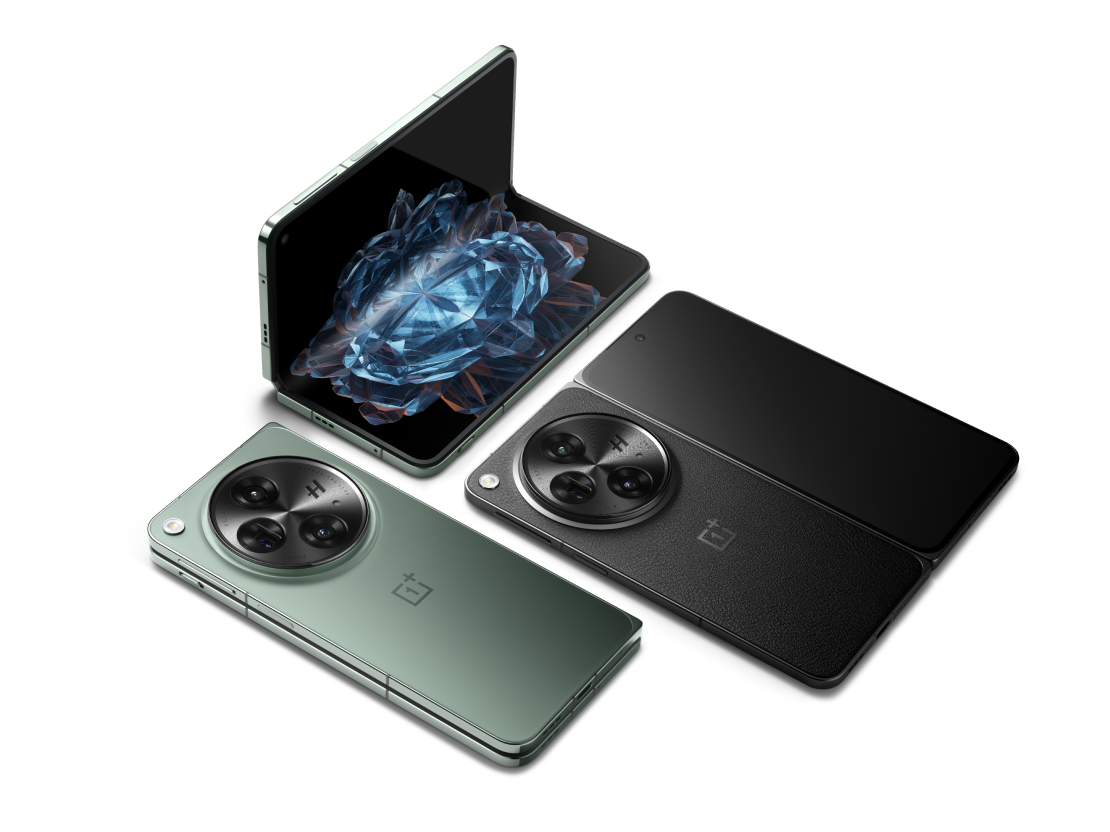
The OnePlus Open represents a pivotal shift in the foldable market, successfully challenging the Samsung monopoly. By prioritizing a "normal" outer screen aspect ratio and revolutionary multitasking software called Open Canvas, it bridges the gap between smartphone and tablet more effectively than any predecessor. While it lacks wireless charging, its superior hinge design, elite camera system, and rapid charging make it a top-tier contender for power users.
Pros
- Minimal crease visibility due to the Flexion Hinge
- Open Canvas multitasking allows for fluid triple-app workflows
- Industry-leading 6.31-inch outer display with a natural aspect ratio
- Exceptional Sony LYT-808 "Pixel Stacked" main camera sensor
- Lightweight design using titanium alloy and carbon fiber
Cons
- No wireless charging support despite the premium positioning
- IPX4 water resistance is inferior to competitors' IPX8 rating
- The massive camera bump can make the device top-heavy and difficult to mount
- OxygenOS can still feel "unpolished" compared to stock Android or One UI
- Limited official repair network in certain regions compared to Samsung
The OnePlus Open represents a pivotal shift in the foldable market, successfully challenging the Samsung monopoly. By prioritizing a "normal" outer screen aspect ratio and revolutionary multitasking software called Open Canvas, it bridges the gap between smartphone and tablet more effectively than any predecessor. While it lacks wireless charging, its superior hinge design, elite camera system, and rapid charging make it a top-tier contender for power users.
Design and Build Quality
The first time you hold the OnePlus Open, the most striking realization isn't that it folds—it's how much it feels like a standard flagship when closed. Unlike the narrow, "remote control" feel of the Samsung Galaxy Z Fold series, the Open employs a 20:9 aspect ratio on its 6.31-inch exterior screen. This is the sweet spot. It means your thumbs don't feel cramped while firing off a quick text, and apps don't look awkwardly squished. The materials used here—a blend of titanium alloy and carbon fiber—allow the device to weigh in at just 239 grams (for the Voyager Black model), which is lighter than an iPhone 14 Pro Max. The "Flexion Hinge" is a mechanical marvel, reducing the part count and creating a fold that is nearly invisible to the touch and the eye. After months of use, the hinge remains stiff enough to hold "Flex Form" angles for video calls, yet smooth enough to flick open with a satisfying snap. However, that massive circular camera housing on the back is polarizing. It’s a design statement that screams "Pro Camera," but it also means the phone never sits flat on a table and can feel top-heavy during long reading sessions.
Performance in Real Use
Despite using the Snapdragon 8 Gen 2 (now succeeded by the Gen 3), the OnePlus Open remains a speed demon. This is largely due to OnePlus's aggressive RAM management and the 16GB of LPDDR5X memory. In daily use, I’ve found that I can leave twenty apps open in the background and return to a game of Genshin Impact without a single frame drop or reload. The real magic, however, isn't just raw speed; it’s thermal efficiency. Even when rendering 4K video or multitasking across three apps, the device stays remarkably cool compared to its peers. The 67W SuperVOOC charging is a genuine lifestyle change for foldable owners. While Samsung users are tethered to a cord for over an hour, the Open goes from 1% to 100% in roughly 42 minutes. The lack of wireless charging is a sting, but the sheer speed of the wired connection mitigates the loss for most high-frequency users.
Ease of Use: The Open Canvas Revolution
The "Open Canvas" software is the single best innovation in the foldable space since the invention of the flexible screen itself. Rather than trying to cram multiple apps into the physical 7.82-inch boundaries, OnePlus allows apps to "exist" off-screen. You can have two apps side-by-side and a third one tucked away to the right; a simple tap slides the third app into view while pushing another away. It feels like using a desktop with multiple monitors rather than a cramped mobile device. This fluidity removes the mental friction of multitasking. Furthermore, the transition between the inner and outer displays is seamless. If you’re navigating on Google Maps on the small screen and unfold, the map expands instantly without a stutter. It’s an intuitive experience that makes you wonder why every other foldable manufacturer hasn't adopted this logic.
Reliability and Long-Term Ownership
Reliability is the elephant in the room for any $1,500+ foldable. OnePlus claims the hinge is tested for 1,000,000 folds—roughly 100 folds a day for 10 years. In the "real world" of Reddit communities and long-term user reports, the consensus is generally positive, but not without caveats. There have been isolated reports of the "black line of death" appearing on the inner screen, often linked to debris entering the hinge or extreme temperature fluctuations. However, the frequency of these reports doesn't seem to exceed the industry average for foldables. The "Ceramic Guard" on the outer screen has proven more scratch-resistant than typical Gorilla Glass Victus in my experience, surviving several "pocket dances" with keys. One long-term concern remains the IPX4 rating. It can handle a splash, but a drop into a sink or a heavy rainstorm is a potential death sentence, unlike the water-resistant Z Fold 5/6.
Use Cases
The OnePlus Open is a dream for the "Mobile Office" archetype. I’ve spent entire flights editing spreadsheets in the top half of the screen while keeping a Slack thread open in the bottom half and a YouTube video floating in the corner. For photographers, the Hasselblad partnership actually yields results here. The 3x periscope zoom is particularly impressive for portraits, providing a natural bokeh that doesn't look like "AI blur." For gamers, the inner screen is a canvas for emulators and high-refresh-rate titles, though the 1:1-ish aspect ratio does mean some letterboxing in modern 16:9 games. It’s also an exceptional e-reader; unfolding it to read a Kindle book feels remarkably similar to holding a high-end physical paperback.
Long Term Ownership Feedback
After six months, the most common feedback from the community is that "going back to a normal phone feels like a downgrade." The battery health has held up remarkably well, still providing a full day of heavy use on a single charge. Some users have noted that OxygenOS updates can be slow to roll out compared to Samsung's monthly patches, and the lack of a robust first-party accessory ecosystem (like specialized stylus cases) is a minor annoyance. However, the hardware's thinness remains its greatest long-term joy. It doesn't bulk up your jeans, making it the first large-screen foldable that doesn't feel like a chore to carry every single day.
| Specification | Details |
|---|---|
| External Display | 6.31-inch Super Fluid AMOLED, 2484 x 1116, 120Hz (up to 240Hz touch), 2,800 nits peak brightness, Ceramic Guard |
| Internal Display | 7.82-inch Flexi-fluid AMOLED, 2440 x 2268, 120Hz adaptive refresh, 2,800 nits peak brightness |
| Processor | Qualcomm Snapdragon 8 Gen 2 |
| RAM | 16GB LPDDR5X |
| Storage | 512GB UFS 4.0, non-expandable |
| Rear Cameras | 48MP main (f/1.7, OIS, Sony LYTIA LYT-T808), 48MP ultrawide (f/2.2), 64MP telephoto 3x optical (f/2.6, OIS, 6x lossless, 120x digital) |
| Front Cameras | 32MP external (f/2.4), 20MP internal (f/2.2) |
| Video Recording | 4K at 60fps, 1080p at 240/480fps slow motion |
| Battery | 4,805mAh dual-cell |
| Charging | 67W SuperVOOC wired, no wireless charging |
| Water Resistance | IPX4 splash resistant |
| Dimensions Folded | 153.4 x 73.3 x 11.7mm (6.03 x 2.88 x 0.46 inches) |
| Dimensions Unfolded | 153.4 x 143.1 x 5.8mm (6.03 x 5.63 x 0.22 inches) |
| Weight | 239g (8.43 ounces) Voyager Black, 245g Emerald Dusk |
| Operating System | Android 13 with OxygenOS 13.2, upgradeable to Android 15 |
| Update Commitment | 4 years Android updates, 5 years security patches |
| Connectivity | 5G, Wi-Fi 7, Bluetooth 5.3, NFC, USB-C 3.1 with video output |
| SIM | Dual nano-SIM with eSIM support |
| Special Features | Physical alert slider, Dolby Atmos stereo speakers, side-mounted fingerprint sensor, IR blaster remote |
| Colors | Emerald Dusk, Voyager Black |
Buy
- You need a foldable that feels like a normal phone when closed
- You are a power user who needs to manage three apps simultaneously without squinting
- You prioritize photo quality, specifically natural skin tones and low-light performance
- You value fast wired charging to top up a large battery in under 45 minutes
- You want the best-in-class hinge that minimizes the "trench" in the middle of the screen
Skip
- Wireless charging is a non-negotiable part of your daily desk or car setup
- You work in dusty or extremely wet environments where IPX4 isn't enough
- You are deeply embedded in the Samsung ecosystem (S-Pen, Galaxy Watch, etc.)
- You prefer a more compact, narrow phone for one-handed thumb typing
- You are wary of first-generation hardware from a brand with evolving support structures
Critic Reviews
Tom's Guide
Critic ReviewNo other foldable comes close to matching the OnePlus Open's overall features set, excellent performance, and low price point. This package propels it over many of its rivals in the foldable phones sp...
TechRadar
Critic ReviewThe OnePlus Open is the only big foldable phone that doesn't feel like a compromise. It looks and feels like a normal phone, and the camera is the best you'll find on a foldable.
PCMag
Critic ReviewThe OnePlus Open is an attractive and well-made foldable smartphone with fluid performance, specialized multitasking software, and excellent screens inside and out.
CNET
Critic ReviewThe OnePlus Open is an impressive first effort. Excellent hardware, good battery life, and fast wired charging stand out, though cameras are just OK and software isn't optimized for the larger display...
Android Authority
Critic ReviewThe Open is polished from top to bottom and might be OnePlus' best hardware in years. It uses a 69-component design that saves both weight and bulk and gives the Open one of the shallowest creases I'v...
User Reviews
Redditor
Owned since December '23. I'd probably say an 8/10. Front screen is very good and as a normal phone it works very well. Inside screen is amazing quality and great for watching content, the crease is barely noticeable.
Redditor
About a 8.5 on a 1-10 scale. It's just about everything I could want in a foldable from the screen to the camera, size and software. There are a couple of features missing when compared to Samsung software but aside from that I'm liking it a lot.
GSMArena Verified User
Upgraded from Z Fold 3 to this phone. I can understand if somebody would still pick another foldable over OnePlus Open but the Z Fold series is imo completely stomped by now.
GSMArena Verified User
The OnePlus Open multitasking Open Canvas UI cannot be overstated how superior it is over BOTH Samsung \& Google which I owned multiple units. The screens are STILL the highest resolution screens of any current foldable, and resolution makes the difference. The non-existent crease, even after months usage, is still invisible.
Best Buy Verified Review
The large screen has a line down the fold but I don't see it when I am using it. Its fun for games and video, and great for multitasking, with all the extra screen space.