
Roku Pro Series
Roku's flagship TV combines impressive brightness, deep blacks, and the industry's most intuitive streaming interface, though HDR color accuracy and narrow viewing angles reveal its mid-range positioning.
Updated January 28, 2026
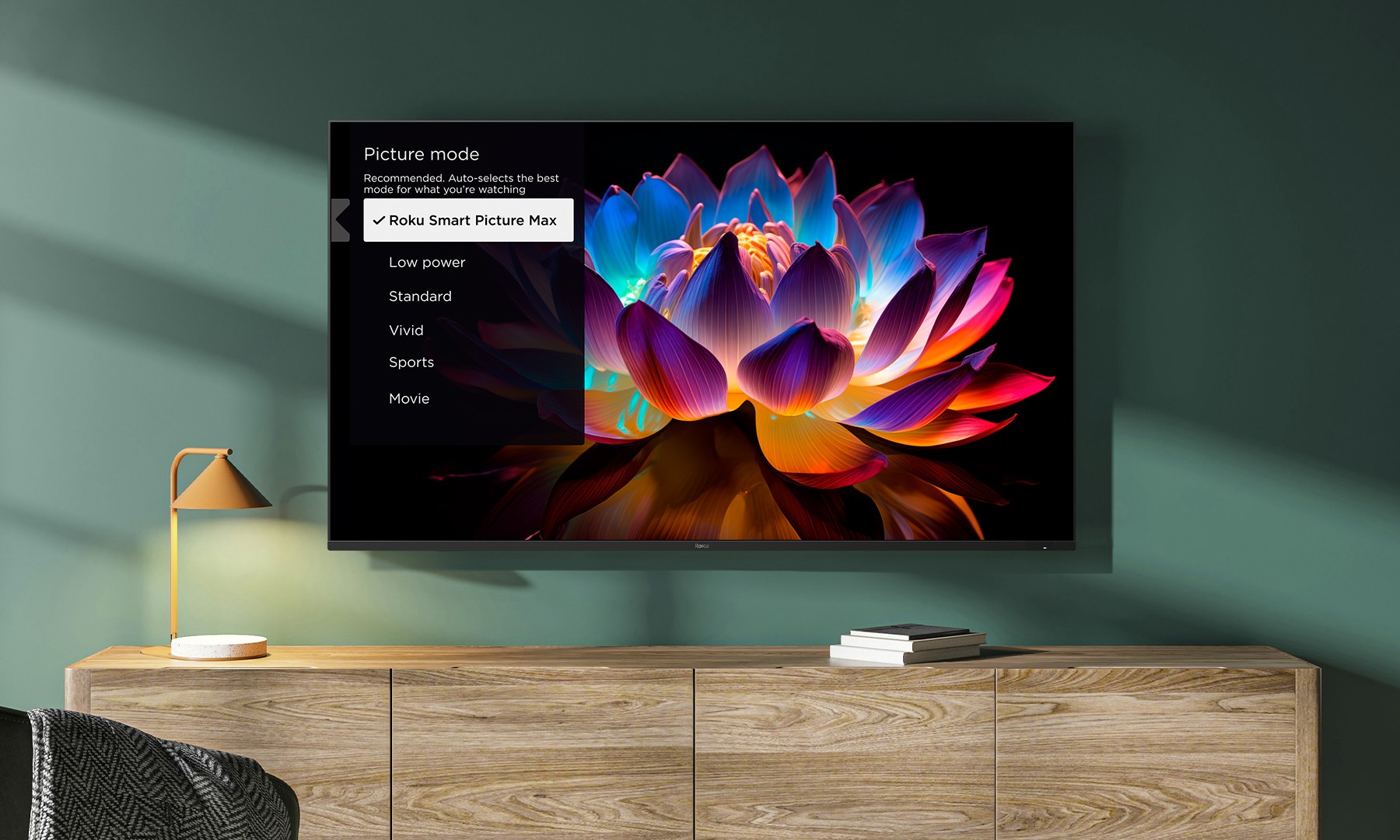
The Roku Pro Series represents the streaming giant's most ambitious television to date, bringing Mini-LED backlighting technology and quantum dot color to a competitive price bracket. Testing across both 2024 and 2025 models reveals a television optimized for bright room viewing and straightforward usability, with exceptional SDR performance and the kind of interface simplicity that made Roku a household name. The 2025 refresh addresses previous weaknesses with improved contrast, refined color accuracy, and enhanced audio output via a slit-loaded speaker system that delivers surprisingly convincing stereo separation. However, technical compromises persist: HDR content displays overly bright, colors stray from filmmaker intent, and the narrow viewing angle restricts placement flexibility. For buyers prioritizing user experience, bright room performance, and Roku's vast streaming ecosystem over reference-grade image fidelity, the Pro Series delivers compelling value against competitors from TCL and Hisense.[1][2][3][4][5]
Pros
- Amazing SDR brightness easily overcomes indirect glare in bright rooms, with measured peak luminance exceeding expectations for this price tier
- Good contrast and zone precision produce deep blacks with minimal haloing around highlights and subtitles
- Roku TV OS version 15 provides industry-leading interface simplicity with fast app launches, voice control, and intuitive navigation
- Comprehensive gaming features including HDMI 2.1 bandwidth, 4k @ 120Hz, VRR support across FreeSync, G-SYNC, and HDMI Forum standards, plus Auto Low Latency Mode
- Rechargeable backlit remote with motion activation and built-in TV finder function eliminates battery changes and improves usability in dark rooms
Cons
- Poor HDR color accuracy and PQ EOTF tracking cause most HDR content to appear over-brightened and fail to preserve filmmaker intent
- Narrow viewing angle causes noticeable image degradation, washed-out blacks, and gamma shifting when viewed from off-axis positions
- Poor handling of direct reflections creates mirror-like distractions despite excellent brightness, limiting placement near windows or lamps
- Mediocre image processing provides only adequate upscaling and low-quality content smoothing, making low-resolution sources appear soft
- Limited bass response and audible speaker rattling during bass-heavy content reveal the need for external audio solutions
The Roku Pro Series represents the streaming giant's most ambitious television to date, bringing Mini-LED backlighting technology and quantum dot color to a competitive price bracket. Testing across both 2024 and 2025 models reveals a television optimized for bright room viewing and straightforward usability, with exceptional SDR performance and the kind of interface simplicity that made Roku a household name. The 2025 refresh addresses previous weaknesses with improved contrast, refined color accuracy, and enhanced audio output via a slit-loaded speaker system that delivers surprisingly convincing stereo separation. However, technical compromises persist: HDR content displays overly bright, colors stray from filmmaker intent, and the narrow viewing angle restricts placement flexibility. For buyers prioritizing user experience, bright room performance, and Roku's vast streaming ecosystem over reference-grade image fidelity, the Pro Series delivers compelling value against competitors from TCL and Hisense.[1][2][3][4][5]
Design and Build Quality
The Roku Pro Series adopts a minimalist design philosophy that prioritizes function over decorative flourishes. The chassis uses sturdy plastic construction that avoids the cheap feel common in budget televisions, with a clean rear panel featuring velcro cable management straps. Available in 55-inch, 65-inch, and 75-inch configurations, the television uses a quantum dot layer combined with Mini-LED backlighting rather than traditional edge-lit LED arrays. This architectural choice enables the local dimming zones that produce the Pro Series' contrast advantage, though the number of zones varies by screen size.[1][2]
The panel itself employs a BGR (Blue-Green-Red) subpixel arrangement instead of standard RGB layout, which poses no issues for video content but can affect text clarity when used as a computer monitor. The glossy screen finish enhances color saturation and contrast in controlled lighting but performs poorly with direct reflections, creating mirror-like distractions when positioned opposite windows or lamps. Installation requires attention to weight, with multiple consumers noting the television's heft as a two-person job. Wall-mounting compatibility exists through Roku's proprietary slim mount, though the recessed input panel becomes difficult to access in this configuration.[4][6][2]
Performance in Real Use
Brightness performance represents the Pro Series' most measurable advantage, with RTINGS testing documenting "amazing SDR brightness" that easily overcomes indirect glare in bright rooms. This characteristic makes the television particularly suitable for living spaces with significant ambient lighting, where competing models struggle to maintain image visibility. Standard dynamic range content benefits from excellent out-of-the-box color accuracy, requiring minimal adjustment for natural-looking images in everyday viewing.[1][2]
High dynamic range content reveals the television's technical limitations. RTINGS measurements confirm poor PQ EOTF tracking, meaning HDR material displays brighter than content creators intended across most brightness levels. This manifests as overly vivid colors that some users appreciate for their immediate impact but technical reviewers criticize for inaccuracy. CNET's testing noted colors appeared "overly vibrant, akin to viewing everything in a 'Vivid' setting even when in 'Movie' mode". Calibration improves but cannot fully resolve these HDR color mapping errors, with blues particularly overrepresented in grayscale.[1][2]
Contrast and black level performance deliver on the Mini-LED promise, with good zone precision minimizing the haloing around bright objects against dark backgrounds. This controlled bloom behavior surpasses edge-lit alternatives and makes the television competitive with pricier Mini-LED options in dark room viewing. However, zone transitions struggle with fast-moving content, creating visible dimming at the leading edge of quick-moving objects.[4][2]
Gaming Performance and Responsiveness
The Pro Series includes comprehensive modern gaming features that justify its appeal to console owners [2][5]. Two HDMI ports support full 2.1 bandwidth enabling 4k @ 120Hz output with variable refresh rate synchronization across FreeSync Premium Pro, G-SYNC, and HDMI Forum VRR standards [2]. Auto Low Latency Mode eliminates manual picture mode switching, and testing confirms full compatibility with PlayStation 5 and Xbox Series X|S feature sets including Dolby Vision gaming [2].
Measured input lag remains low enough for responsive competitive gaming, though the television's pixel response times land in the "okay" category rather than exceptional. This produces visible motion blur in fast-paced games, particularly noticeable in first-person shooters and racing titles where rapid camera movement exposes the slower transitions. Consumer reviews from Xbox Series X owners report seamless integration and satisfaction with 120Hz performance. The optional LED Motion Clarity backlight strobing feature provides only marginal improvement and introduces image duplication artifacts.[7][2]
Audio System Evaluation
Roku's 2025 refresh addresses previous audio criticisms with a redesigned slit-loaded speaker system that delivers improved stereo separation and clarity. CNET's extended testing praised the audio as "some of the best available outside of a soundbar" with "surprisingly decent bass" given the physical constraints. The speakers handle dialogue intelligibility well across all volume levels with a balanced frequency response in the midrange.[3][1][2]
Bass extension remains the system's fundamental weakness, with RTINGS measurements confirming "very little bass" typical of flat-panel televisions. Action sequences, explosions, and music with significant low-frequency content expose this limitation, and testing revealed audible speaker rattling during bass-heavy passages even at moderate volume. TechRadar noted "the low end is very lacking" during action scenes. Consumer opinions diverge on audio adequacy, with some praising the built-in sound as sufficient and others immediately pairing the television with external systems.[9][3][7][2]
Interface and Smart Platform Experience
The Roku TV OS version 15 represents the Pro Series' most distinctive advantage over technically superior competitors running Google TV or proprietary interfaces. Consumer reviews consistently highlight setup simplicity and daily usability as primary satisfaction drivers, with the platform's straightforward navigation and comprehensive app catalog reducing friction. Wi-Fi 6 support delivers faster app launches and smoother streaming compared to previous Roku television generations.[5][7][6]
The included rechargeable remote eliminates battery replacement through USB-C charging and adds motion-activated backlighting for dark room use. A built-in remote finder function triggered from the television helps locate misplaced controllers. Testing uncovered intermittent remote connectivity issues requiring television restarts, and the interface becomes inaccessible when Wi-Fi disconnects, with a blank home screen preventing even local input access. Voice control functionality works adequately for basic commands and content search, though it lacks the contextual sophistication of voice assistants on premium competing platforms.[5][6][2]
Long-Term Ownership Considerations
The Pro Series' narrow viewing angle emerges as a critical placement constraint, with RTINGS measurements documenting significant image degradation from off-axis positions. Raised black levels and gamma shifting cause washed-out appearance when viewed from the sides, making the television unsuitable for wide seating arrangements or open-concept spaces where viewers sit at angles to the screen. This limitation receives less attention in consumer reviews than professional testing would suggest, possibly because most buyers position televisions for direct viewing.[6][2][4]
Image processing capabilities land in the mediocre category, with only adequate upscaling and low-quality content smoothing. Standard definition sources and heavily compressed streaming content display with visible softness and artifacts that more sophisticated processing engines handle better. The television excels with high-quality 4K sources but struggles to elevate lower-resolution material, an important consideration for viewers with mixed content libraries.[2]
Competitive context matters when evaluating the Pro Series' value proposition. RTINGS direct comparisons confirm the TCL QM7K and Hisense U75QG models deliver superior black levels, color volume, and image processing at comparable price points. The Roku's advantage concentrates in its streaming interface, where buyers with strong platform preferences or previous Roku familiarity may prioritize usability over incremental picture quality improvements. Tom's Guide testing noted "Roku has some serious competition in the form of both TCL and Hisense" with competitor models offering more local dimming zones and features at similar or lower prices.[8][16][4][6][2]
The 2025 model iteration brings meaningful improvements over the 2024 version, including significantly better SDR color accuracy out of the box, improved upscaling, and reduced gradient banding. These refinements address specific criticisms while maintaining the core strengths that earned the original Pro Series positive reception, suggesting Roku's commitment to iterative development based on user and reviewer feedback. For buyers seeking a straightforward television optimized for bright room viewing with exceptional interface usability and adequate technical performance, the Pro Series delivers compelling value within its design parameters and price positioning.[11][7][6][2]
| Specification | Details |
|---|---|
| Screen Technology | QLED with Mini-LED backlighting and local dimming |
| Available Sizes | 55-inch (55R8C5), 65-inch (65R8C5), 75-inch (75R8C5) |
| Resolution | 4K (3840 x 2160) |
| Refresh Rate | 120Hz native |
| HDR Support | Dolby Vision IQ, HDR10+, HDR10, HLG |
| HDMI Ports | 4 total (2x HDMI 2.1 with 48Gbps bandwidth, 2x HDMI 2.0) |
| Gaming Features | VRR (FreeSync Premium Pro, G-SYNC, HDMI Forum VRR), ALLM, 4k @ 120Hz |
| Audio Technology | Dolby Atmos support, slit-loaded stereo speaker system |
| Smart Platform | Roku TV OS version 15 with Wi-Fi 6 |
| Voice Control | Hands-free voice control with remote finder function |
| Remote | Rechargeable motion-activated backlit remote with USB-C charging |
| Tuner | ATSC 1.0 (no 4k over-the-air support) |
Buy
- Roku's streaming platform preference: Native Roku OS eliminates third-party interface frustrations and provides direct access to thousands of streaming channels[7][6]
- Bright room viewing priority: Measured SDR brightness performance suits well-lit living spaces and rooms with significant ambient lighting[2]
- Gaming with modern consoles: Full HDMI 2.1 feature set supports PlayStation 5 and Xbox Series X|S capabilities including Dolby Vision gaming [2]
- Straightforward setup and operation: Consumer reviews consistently praise easy installation and intuitive daily use without steep learning curves[6][7]
- Value-focused home theater: Competitive pricing delivers Mini-LED technology and quantum dot color at lower cost than premium brands[4][6]
Skip
- Reference HDR viewing: Technical measurements confirm significant HDR brightness and color inaccuracies that calibration cannot fully resolve[2]
- Wide seating arrangements: Narrow viewing angle makes the television unsuitable for rooms requiring off-axis viewing positions[4][2]
- Low-resolution content consumption: Mediocre upscaling performance means standard definition and heavily compressed sources display with visible artifacts[2]
- Competitive Mini-LED alternatives: TCL QM7K and Hisense U75QG models offer superior black levels, color volume, and image processing at comparable prices[8][2]
- Critical listening without soundbar: Weak bass extension and speaker distortion during dynamic content require external audio investment[4][2]
Critic Reviews
No reviews yet.
User Reviews
No reviews yet.