
Sony BRAVIA XR A95L
Sony's second-generation QD-OLED delivers exceptional brightness, color accuracy, and processing that outperforms most competitors, though limited HDMI 2.1 connectivity and higher input lag may deter serious gamers.
Updated January 28, 2026
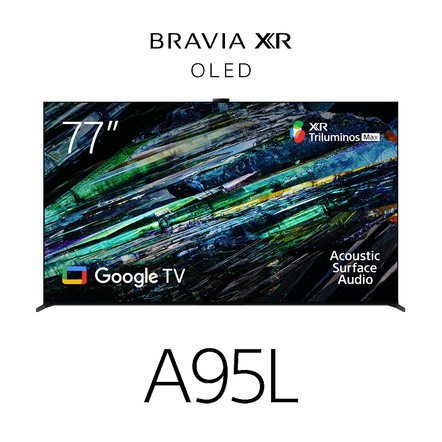
The Sony BRAVIA XR A95L represents the pinnacle of consumer television technology, combining a second-generation Quantum Dot OLED panel with Sony's Cognitive Processor XR to create one of the most critically acclaimed displays of recent years. This flagship model delivers exceptional HDR brightness - up to 200% brighter than its predecessor - while maintaining the perfect blacks and near-infinite contrast ratio inherent to OLED technology. What distinguishes the A95L from competitors is Sony's legendary video processing, which excels at upscaling lower-resolution content, handling motion without artifacts, and preserving the filmmaker's intent with remarkable color accuracy. The TV arrives with Google TV integration, Acoustic Surface Audio+ technology that vibrates the screen to emit sound, and a BRAVIA CAM for gesture control and ambient optimization. While the A95L commands premium positioning, it faces practical limitations: only two HDMI 2.1 ports (with one shared with eARC) frustrate users with multiple next-gen gaming consoles, and input lag measures higher than competing Samsung and LG models. Initial vertical banding issues on dark content have been reported by some users, though these typically resolve after several months of use. Despite these concerns, professional reviewers and consumers consistently praise the A95L as delivering reference-quality imagery that justifies consideration for cinephiles and discerning viewers who prioritize picture fidelity above all else.[2][3][4][5][6][7][8][9][10][11][1]
Pros
- Exceptional color accuracy and brightness: The QD-OLED panel delivers vibrant, lifelike colors with impressive HDR peak brightness that makes highlights truly pop, while maintaining accuracy to the filmmaker's intent without calibration
- Outstanding video processing: Sony's Cognitive Processor XR provides industry-leading upscaling of HD and lower-resolution content, superior motion handling, and intelligent picture enhancement that competitors struggle to match
- Perfect blacks and contrast: OLED technology with near-infinite contrast ratio delivers inky blacks and exceptional shadow detail, creating depth and dimensionality in every scene
- Wide viewing angles: The QD-OLED panel maintains luminance and color consistency across all viewing angles, superior to traditional OLED displays
- Premium build quality and audio: Acoustic Surface Audio+ technology vibrates the screen for sound that appears to come directly from on-screen action, while the One Slate design delivers reassuring premium aesthetics
Cons
- Limited HDMI 2.1 connectivity: Only two HDMI 2.1 ports with one shared with eARC severely restricts connectivity for users with multiple gaming consoles, PCs, or home theater equipment
- Higher input lag than competitors: Measured at 16.1ms, input lag exceeds competing LG and Samsung models that easily achieve under 10ms, potentially impacting competitive gaming performance
- Initial vertical banding issues: Some units exhibit vertical banding on dark scenes out of the box, requiring 4-5 months of regular use for the panel to settle and the issue to resolve
- Motion stutter in cinematic content: The nearly instantaneous pixel response time can create noticeable stutter in 24fps movies and television shows
- Premium pricing without full feature parity: Lacks Filmmaker Mode and ships with some deep calibration features unavailable at launch, while commanding the highest price point in the OLED category
The Sony BRAVIA XR A95L represents the pinnacle of consumer television technology, combining a second-generation Quantum Dot OLED panel with Sony's Cognitive Processor XR to create one of the most critically acclaimed displays of recent years. This flagship model delivers exceptional HDR brightness - up to 200% brighter than its predecessor - while maintaining the perfect blacks and near-infinite contrast ratio inherent to OLED technology. What distinguishes the A95L from competitors is Sony's legendary video processing, which excels at upscaling lower-resolution content, handling motion without artifacts, and preserving the filmmaker's intent with remarkable color accuracy. The TV arrives with Google TV integration, Acoustic Surface Audio+ technology that vibrates the screen to emit sound, and a BRAVIA CAM for gesture control and ambient optimization. While the A95L commands premium positioning, it faces practical limitations: only two HDMI 2.1 ports (with one shared with eARC) frustrate users with multiple next-gen gaming consoles, and input lag measures higher than competing Samsung and LG models. Initial vertical banding issues on dark content have been reported by some users, though these typically resolve after several months of use. Despite these concerns, professional reviewers and consumers consistently praise the A95L as delivering reference-quality imagery that justifies consideration for cinephiles and discerning viewers who prioritize picture fidelity above all else.[2][3][4][5][6][7][8][9][10][11][1]
Design and Build Quality
The Sony BRAVIA XR A95L embodies premium television design through its One Slate aesthetic, featuring a minimal dark aluminum edge bezel that allows the display to command attention without distraction. Build quality and finish meet the expectations of flagship positioning, with materials and construction that convey reassuring solidity. The included BRAVIA CAM attaches magnetically to the top of the display, adding gesture control and ambient optimization capabilities without compromising the clean lines. Sony's design philosophy prioritizes the screen itself, minimizing visual clutter while maintaining structural integrity across the 55-inch, 65-inch, and 77-inch size options.[6][8][5]
The display panel incorporates physical heat management solutions that work in concert with the Cognitive Processor XR's thermal analysis to enable sustained brightness levels without thermal throttling. This engineering attention extends to the Acoustic Surface Audio+ implementation, which positions actuators behind the OLED panel alongside dual subwoofers to vibrate the screen for sound emission. The result creates audio that appears to originate directly from on-screen action, a distinctive Sony feature that eliminates the disconnection between visual and audio sources common in conventional television speakers.[8][3]
Performance in Real Use
Picture quality defines the A95L experience, with the second-generation QD-OLED panel delivering a visual presentation that professional reviewers consistently describe as reference-grade. The combination of quantum dot technology with OLED's self-emissive pixels produces colors that are simultaneously vibrant and accurate, achieving approximately 200% the peak brightness of Sony's previous QD-OLED model while maintaining perfect blacks and near-infinite contrast. HDR content showcases this capability most dramatically, with specular highlights that truly pop against inky shadows while preserving detail across the entire luminance range.[13][11][3][5][6][1]
Sony's Cognitive Processor XR distinguishes the A95L from competing QD-OLED displays through superior video processing that addresses multiple performance dimensions simultaneously. The XR 4K Upscaling technology accesses extensive databases to intelligently recreate lost texture and detail when displaying HD, broadcast, or compressed streaming content, producing results that approach native 4K quality. Users report remarkable clarity improvement with lower-resolution sources, with some noting that 720p and 1080p content looks substantially better than on competing displays. Motion handling through XR OLED Motion technology analyzes scene data to maintain smooth, bright, clear action without blur or artifacts, particularly beneficial for fast-moving content.[7][15][24][13][3][4]
Color performance extends beyond simple vibrancy to encompass accuracy and nuance that preserves creative intent. The XR Triluminos Max technology leverages the QD-OLED panel's capabilities to deliver colors that are both punchy and naturalistic, avoiding the oversaturation that plagues some competing displays even in Vivid mode. Professional modes provide out-of-the-box accuracy suitable for content creation and critical viewing, with HDR tone mapping that feels natural and well-judged rather than artificially boosted. The display maintains this color and contrast consistency across wide viewing angles, a specific advantage of QD-OLED technology over traditional WOLED panels.[13][14][4][6][8][1]
Gaming performance supports modern features including 4K 120Hz, variable refresh rate, auto low latency mode, and Dolby Vision gaming across its two HDMI 2.1 ports. The nearly instantaneous pixel response time eliminates motion blur behind fast-moving objects, delivering exceptionally sharp motion clarity. PlayStation 5 owners benefit from automatic HDR tone mapping and optimized picture modes that activate when the console is detected, streamlining setup and enhancing visual quality for supported games. However, input lag measures 16.1ms in game mode, below the 20ms threshold for acceptability but substantially higher than the sub-10ms figures achieved by LG and Samsung competitors. The limitation to only two HDMI 2.1 ports creates practical connectivity challenges, with one of those ports shared with eARC functionality for audio systems.[9][2][3][5][8][1]
Ease of Use
Google TV provides the smart platform foundation, delivering stable and fast performance with access to major streaming services. The interface supports voice control through Google Assistant and Amazon Alexa, with hands-free operation available when using the included BRAVIA CAM. Apple ecosystem integration through AirPlay and HomeKit extends compatibility beyond Google services. Users consistently praise the intuitive navigation and quick app access, though some note the need for manual picture adjustment depending on content type.[14][19][5][12]
Picture settings offer extensive customization but ship with certain features disabled by default that significantly impact perceived quality. Reality Creation, Black Adjust, and Advanced Contrast Enhancer require manual activation to fully optimize performance, creating initial disappointment for users expecting perfect plug-and-play experience. Professional calibration options support Netflix Calibrated Mode, BRAVIA CORE Calibrated Mode, and IMAX Enhanced, though some advanced features like Filmmaker Mode are notably absent. The learning curve for settings optimization can be substantial, with many owners consulting detailed calibration guides from sites like RTINGS to achieve optimal results.[15][19][14]
Reliability and Long-Term Ownership
OLED burn-in concerns persist across all self-emissive display technologies, but Sony's implementation demonstrates effective mitigation through sophisticated compensation algorithms. Independent long-term testing shows the A95L's panel refresh technology successfully compensates for burn-in, maintaining uniform brightness across the screen even after extended exposure to static content. Sony's panel management performs similarly to the company's previous OLED models, with both short and long refresh cycles showing significant improvement in burn-in appearance.[18][17]
Initial quality control issues affect some units, with vertical banding on dark content representing the most commonly reported concern. Users experiencing this problem describe pervasive banding across the entire screen particularly noticeable in dark scenes, dusk sequences, or dimly lit rooms. This typically resolves naturally after 4-5 months of regular use as the panel breaks in, though this extended wait period creates frustration for customers expecting immediate perfection from a premium purchase. Additional isolated reports mention replacement units arriving with damaged screens or panels that fail within the first week, though these appear to be outlier experiences rather than systemic problems.[19][10]
Use Cases
The A95L excels as a dedicated home theater display for cinephiles and videophiles who prioritize picture quality above all other considerations. The combination of reference-grade color accuracy, exceptional HDR performance, and superior upscaling makes it ideal for enthusiasts with varied content libraries spanning 4K streaming, Blu-ray collections, and legacy formats. Professional content creators benefit from the out-of-the-box accuracy in professional modes and support for industry-standard picture presets.[11][3][4][13][14][1]
The display suits living room environments with controlled lighting rather than bright rooms with constant ambient light. While HDR brightness is impressive for an OLED, SDR brightness remains merely decent rather than exceptional. PlayStation 5 owners represent a natural target audience given the optimized gaming features, though Xbox Series X and PC gamers should carefully consider the input lag and port limitations. Sports enthusiasts may encounter disappointment with live broadcast content, particularly lower-quality cable or satellite feeds, though on-demand and streaming sports content generally performs well.[24][16][20][8][1]
The A95L makes less sense for users seeking maximum value, as competing QD-OLED panels from Samsung offer similar core technology at reduced positioning. Multi-console gaming households with extensive home theater equipment will struggle with the limited HDMI 2.1 connectivity. Buyers who demand immediate perfection without break-in periods or manual calibration should also consider alternatives, as the A95L often requires both patience and adjustment to reach its full potential.[3][9][10][14][19]
| Specification | Details |
|---|---|
| Panel Type | Quantum Dot OLED (QD-OLED) [5][21] |
| Screen Sizes | 55-inch, 65-inch, 77-inch [8] |
| Resolution | 4K UHD (3840 x 2160) [5][21] |
| Refresh Rate | 120Hz native [5][21] |
| HDR Support | Dolby Vision, HDR10, HLG [5] |
| Processor | Cognitive Processor XR [5][7] |
| HDMI Ports | 4 total (2x HDMI 2.1 at 48Gbps, 2x HDMI 2.0) [21][14] |
| Gaming Features | VRR, ALLM, 4K 120Hz, Dolby Vision Gaming [5][8] |
| Smart Platform | Google TV with Google Assistant, Alexa, AirPlay [5] |
| Audio Technology | Acoustic Surface Audio+ with screen-vibrating actuators and dual subwoofers [8][3] |
| Color Space | DCI-P3 with 10-bit chroma resolution [5] |
| Special Features | BRAVIA CAM included, IMAX Enhanced, XR Triluminos Max, XR 4K Upscaling [5][8][15] |
Buy
- You prioritize picture quality above everything: The A95L consistently ranks as one of the best-looking televisions ever reviewed, with reference-grade color accuracy and processing[11][3][4]
- You watch varied content sources: Industry-leading upscaling means streaming services, broadcast television, and even DVD content look remarkably sharp and detailed[4][13][1]
- You're a cinephile or content creator: Out-of-the-box accuracy in professional modes and support for Netflix Calibrated and BRAVIA CORE Calibrated modes preserve creative intent[5][15][1]
- You have a PlayStation 5: Automatic HDR tone mapping and optimized picture modes specifically designed for PS5 deliver an enhanced gaming experience[16][8]
- You value long-term reliability: Sony's panel refresh technology and compensation algorithms effectively manage OLED burn-in risks better than many competitors[17][18]
Skip
- You're a serious multi-console gamer: Limited HDMI 2.1 ports and higher input lag make competing Samsung and LG models more practical for gaming-focused setups[2][3][9]
- You need immediate plug-and-play perfection: Some units require months of break-in time to resolve vertical banding, creating frustration for users expecting flawless performance from day one[10]
- You're budget-conscious: Competing QD-OLED models from Samsung offer similar panel technology at substantially lower price points[19][14]
- You watch primarily sports and fast action: Motion stutter from instantaneous pixel response and potential issues with live broadcast content upscaling may disappoint sports enthusiasts[20][1]
- You need maximum connectivity flexibility: Users with home theater PCs, multiple consoles, and external audio systems will struggle with only two full-bandwidth HDMI 2.1 connections[3][9]
Critic Reviews
No reviews yet.
User Reviews
No reviews yet.