
Best Gaming WiFi of 2026

Best Gaming WiFi of 2026

Gaming WiFi Routers That Prioritise Performance When Every Millisecond Counts

Created January 12, 2026 • Updated February 14, 2026

Expert-tested routers engineered to reduce lag, prioritise gaming traffic, and handle demanding households where multiple devices compete for bandwidth.

Sponsored advertisement
Rank#01

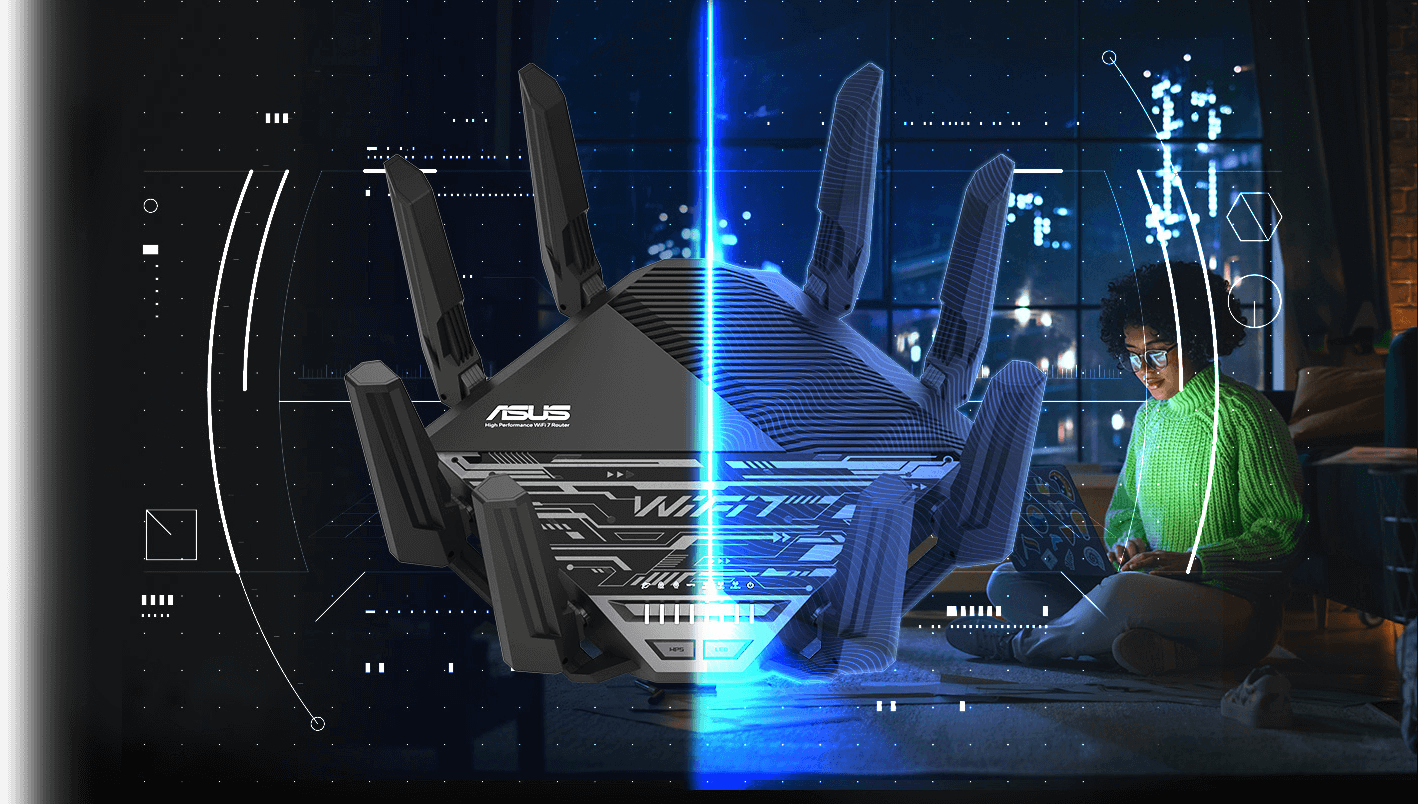
ASUS RT-BE96U: The Wi-Fi 7 Powerhouse for the Next Era of Connectivity

Blistering 19 Gbps speeds and dual 10G ports make this the ultimate future-proof hub for high-demand households. Ready to unleash the full potential of your 6GHz devices?

Shrook Score
89
Generally Favorable

Published December 31, 2025 • Updated February 8, 2026

The ASUS RT-BE96U stands as a premier entry into the Wi-Fi 7 market, offering tri-band connectivity with massive throughput. It bridges the gap between prosumer needs and mainstream usability, featuring dual 10Gbps ports and advanced ASUSWRT management.

Pros

  • Wi-Fi 7 support including 320MHz channels and 4K-QAM for extreme speeds. /n Dual 10-Gigabit WAN/LAN ports for multi-gig internet and high-speed NAS setups. /n Massive 19,000 Mbps aggregate bandwidth across three bands. /n Robust AiMesh support for creating a seamless whole-home network. /n Subscription-free AiProtection Pro powered by Trend Micro for lifetime security.

Cons

  • Large physical footprint requires significant shelf or wall space. /n Significant heat generation during heavy load necessitates good ventilation. /n Early adoption of Wi-Fi 7 means some client devices may still face minor compatibility quirks. /n 6GHz range is inherently shorter than 2.4GHz and 5GHz bands. /n High-end feature set may be overkill for users on standard gigabit internet plans.

Rank#02

TP-Link Archer BE9700: The Definitive Entry Point to the Wi-Fi 7 Era

Ready to leave lag in the past? The TP-Link Archer BE9700 brings Wi-Fi 7 speeds and the ultra-clean 6GHz band to your home, offering a future-proof backbone for 8K streaming and pro-grade gaming.

Shrook Score
87
Generally Favorable

Published December 31, 2025 • Updated February 8, 2026

The TP-Link Archer BE9700 stands as a formidable tri-band Wi-Fi 7 router designed to bridge the gap between enthusiast hardware and mainstream usability. Featuring Multi-Link Operation (MLO) and significantly increased bandwidth via the 6GHz spectrum, it offers a massive leap over Wi-Fi 6/6E standards for compatible devices.

Pros

  • Delivers true Wi-Fi 7 speeds up to 9.7 Gbps across tri-band configuration with strong real-world performance
  • Features 10 Gbps WAN/LAN port plus four 2.5 Gbps ports for future-proof wired connectivity
  • Provides excellent wireless range and coverage through six external antennas with beamforming technology
  • Supports comprehensive VPN server and client configurations including OpenVPN, WireGuard, PPTP, and L2TP protocols
  • Offers competitive value positioning in the Wi-Fi 7 router market segment

Cons

  • Plain, utilitarian design lacks the premium aesthetics found on competing routers
  • Some users report inconsistent range performance in certain deployment scenarios
  • Advanced HomeShield security features require paid subscription beyond basic functionality
  • Setup and configuration may be less intuitive for non-technical users compared to mesh systems
  • Wi-Fi 7 benefits require compatible client devices which remain limited in the current market
Rank#03

TP-Link Archer BE550: The Practical Gateway to the Wi-Fi 7 Revolution

Wi-Fi 7 is no longer a luxury for the elite. The Archer BE550 brings multi-gigabit speeds and the 6GHz band to the mainstream, proving you don't need to spend four figures to future-proof your home network.

Shrook Score
84
Generally Favorable

Published December 31, 2025 • Updated February 8, 2026

The TP-Link Archer BE550 (BE9300) represents a pivotal shift in networking, offering the high-end capabilities of Wi-Fi 7—including the 6GHz band and Multi-Link Operation (MLO)—in a sleek, reasonably sized chassis. With a full suite of 2.5Gbps ports, it addresses the bottleneck of modern fiber connections, making it one of the most balanced routers for the average power user.

Pros

  • Delivers impressive throughput with over 2 Gbps at close range and 600-1,800 Mbps at mid-range distances
  • Four 2.5 Gbps Ethernet ports per unit provide flexible wired connectivity options
  • Straightforward setup and management through intuitive Deco mobile application
  • Comprehensive HomeShield security and parental control features included
  • Supports both wireless and wired backhaul configurations with combined backhaul aggregation

Cons

  • Lacks 10 Gbps Ethernet connectivity found on premium competitors like Deco BE85
  • Satellite node performance trails router node speeds in performance testing
  • MLO network requires compatible client devices to access full benefits
  • Uses mid-tier Qualcomm Networking Pro 620 chipset rather than flagship processor
  • 2X2 data stream configuration limits potential throughput compared to 4X4 systems
Rank#04

TP-Link Archer GX90 Review: The Tri-Band Powerhouse That Tames Latency Without Breaking Your Network

Forget lag spikes and bandwidth brawls. The TP-Link Archer GX90 carves out a dedicated 4.8 Gbps lane specifically for your gaming rig, ensuring your competitive edge remains razor-sharp while the rest of the house streams in 4K.

Shrook Score
85
Generally Favorable

Published December 31, 2025 • Updated February 8, 2026

The TP-Link Archer GX90 (AX6600) is a purpose-built Wi-Fi 6 gaming router designed to eliminate interference in high-traffic households. By utilizing a tri-band architecture, it offers a dedicated 5GHz "Gaming Band" that operates independently of standard home traffic. Boasting a 2.5 Gbps wired port and robust Game Accelerator software, it bridges the gap between enthusiast performance and consumer-friendly setup. While its aggressive aesthetic and large footprint may not suit every decor, its ability to maintain ultra-low latency under load makes it a top-tier contender for serious gamers.

Pros

  • Dedicated 4.8 Gbps Gaming Band prevents congestion from other devices /n 2.5 Gbps WAN/LAN port supports high-speed fiber internet and NAS /n Game Accelerator automatically detects and optimizes gaming streams /n Comprehensive "Game Center" UI provides real-time latency and resource monitoring /n OneMesh compatibility allows for easy whole-home coverage expansion

Cons

  • Significant physical footprint requires substantial shelf or desk space /n Eight external antennas are fixed and cannot be replaced or repositioned /n Advanced HomeShield security features require a recurring monthly subscription /n 2.4 GHz band performance is underwhelming compared to the 5 GHz bands /n Aggressive red-and-black "gamer" aesthetic may clash with minimalist home decor
Rank#05

eero Max 7 Review: Is This the Ultimate Wi-Fi 7 Powerhouse for Your Home?

Amazon’s eero Max 7 redefines home connectivity with blistering Wi-Fi 7 speeds and massive 10GbE throughput. If you’re tired of bandwidth bottlenecks and want a future-proof mesh system that just works, this is the hardware upgrade your smart home has been waiting for.

Shrook Score
86
Generally Favorable

Published December 31, 2025 • Updated February 8, 2026

The eero Max 7 represents a significant leap forward for Amazon's networking arm, moving from mid-range consumer mesh to enthusiast-grade hardware. It features a tri-band Wi-Fi 7 radio system and a massive upgrade to wired connectivity with dual 10-Gigabit ports. While it maintains the user-friendly "set it and forget it" ethos of the eero brand, the sheer scale of the hardware targets power users who need to move massive amounts of data across multiple devices simultaneously.

Pros

  • Blistering Wi-Fi 7 speeds with support for the 320MHz channel width. /n • Massive wired throughput featuring two 10GbE and two 2.5GbE ports. /n • Incredible range and penetration that outperforms previous eero generations. /n • Industry-leading setup experience via the intuitive eero mobile app. /n • Built-in smart home hub functionality with support for Zigbee, Thread, and Matter.

Cons

  • Physical footprint is significantly larger than previous eero models. /n • Advanced networking features are locked behind an eero Plus subscription. /n • Limited manual control over specific radio bands and channels for prosumers. /n • Runs noticeably warm during high-throughput data transfers. /n • Requires a substantial investment relative to Wi-Fi 6E alternatives.

Related content